Community swimming pools in at the deep end of transformation
Reading time: 6 min
Public swimming pools are vital local amenities. In the face of rising energy costs, and of course, climate emergency, community pools are entering a new era. At the heart of this transformation, VINCI Energies expertise is helping to make these facilities more accessible, more sustainable and more intelligent.
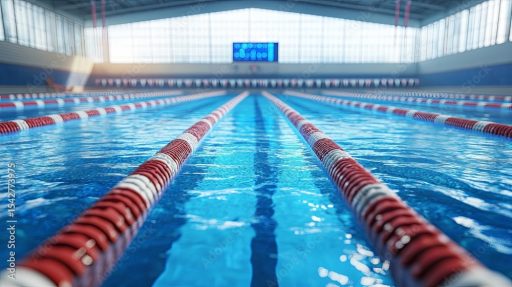
In the Flemish Region of Belgium, construction of the future Bredene swimming pool is under way. Its 3,000 sq. metre building will make it one of Belgium’s largest swimming complexes not to use gas, with half the energy consumption of a conventional pool. This performance is based on 761 solar panels and a geothermal well able to draw water for heating at between 30 and 35 °C from a depth of 1,250 metres.
The infrastructure is part of an ambitious local-government plan launched in March 2025 to build 40 new fully accessible carbon-neutral public pools.
“Many swimming pools in Flanders date from the 1960s and 1970s. They are extremely energy-hungry and often obsolete,” says Bart Schurmans, Business Unit Manager at Cegelec HVAC Public North (VINCI Energies Building Solutions). While the technology in this complex makes it unique, all the new pools will be fully electric.
Numerous energy-saving solutions currently exist to help make swimming pools more energy efficient: high-performance ventilation units with air pumps, cogeneration systems producing both heat and electricity, and low-temperature/high-output boilers. And of course, new water treatment systems.
Water quality and uses
Another challenge for swimming pools is water quality and the options for reuse. Also in Belgium, in Wallonia, Grégory Laurent, Sector Manager at VINCI Facilities TS South (VINCI Energies Building Solutions), explains that the law requires 30 litres of water replacement per swimmer per day. Previously, this water could only be stored in grey-water reservoirs, filtered and reused for beach cleanups, toilet flushing and general maintenance.
Now, it can also be used for heating by passing it through a heat exchanger before returning it to the grey-water buffer tank. Thanks to more effective new filtration systems, 70% of the reclaimed water can be reinjected directly into the circuit.
“When you create or renovate a pool, various aspects come together: fluids, hydraulics, chemistry and civil engineering”
Water quality is a speciality for Franck Mougin, Project Manager at VINCI Facilities Franche-Comté (VINCI Energies Building Solutions) and an expert in ceramic filtration. This new process – similar to osmosis – uses silicon carbide membranes. The result is permanently crystal-clear water for swimmers, along with energy savings, more available space in the technical premises, and longer filter life.
Meanwhile, Arnaud Christien, Project Manager at Tunzini Océan Indien, is banking instead on perlite filtration to replace aging sand-filtration systems: “This saves us 30 to 40 cubic metres a week, which would otherwise be discharged into the sewers.” Working with electrolysers that use salt to produce a chlorinated solution avoids the storage, handling and transportation of chlorine in powder or pellet form. These units use only salt, which is more eco-friendly and better for the health of operators and technicians.
The accessibility issue
The swimming-pool sector also faces considerable technical challenges that require hard-to-find skills (see box). “When you create or renovate a pool, various aspects come together: fluids, hydraulics, chemistry and civil engineering,” says Arnaud Christien. All these areas of expertise have to work together to meet the ecological and economic challenges, not to mention public health issues.
In Flanders, accessibility for people with disabilities is a key element in the design brief for any swimming pool. The region is also alleviating its lack of pools, which as Bart Schurmans says, are “Nowhere near enough to provide access for the whole population”.
This is also the case in France, where municipal councils, especially in rural areas, are building or renovating facilities under the drowning prevention and water ability development plan initiated by the Ministry for Youth, Sports and Community Life. The aim is to bring people closer to swimming pools. On Reunion Island, the stakes are certainly high: “In Les Hauts [mountain areas], 70% of children haven’t learned to swim,” says Arnaud Christien.
This is the background to the construction, for example, of the municipal pool in Salazie, in the centre of the island, which is heated to 27 °C all year round by solar collectors installed on the roof. For our project manager from Tunzini Océan Indien, swimming pools are infrastructure of the future, not only for teaching children to swim, but also to improve the well-being of an aging population and create cool islands. Here as elsewhere, swimming pools are undergoing a revolution to reconcile public necessity and ecological transition.
Skills to be cultivated
All these new technologies come with an unexpected side effect: finding qualified technicians to maintain the systems is no simple feat, according to Grégory Laurent from VINCI Facilities TS South. The future of the sustainable swimming pool must be accompanied by an increase in expertise in our teams, which is being provided in part by the VINCI Energies Academies. “This is a complex job, and there’s no school for it,” says Arnaud Christien from Tunzini Océan Indien, who himself got his training working in the field and talking with local operators, equipment suppliers and designers specialised in treating water for swimming pools.
01/15/2026