Germany’s high-voltage network: a story of modernisation and cooperation
Reading time: 5 min
Germany is modernising its power supply network to integrate renewable energies. This massive and challenging undertaking requires close cooperation between the organisations involved. Omexom is playing a key role in the project.
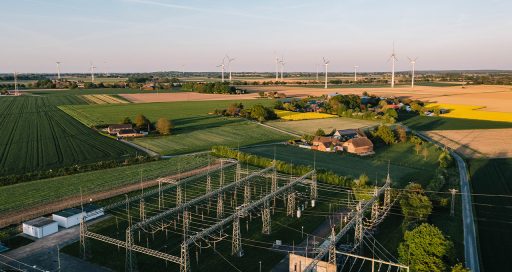
©Omexom Deutschland
In line with its resolute commitment to energy transition, Germany is comprehensively reworking its power supply network. With a decentralised structure featuring more than 800 distribution network operators (DNOs) and four transmission network operators (TNOs), the Federal Republic of Germany faces an unprecedented challenge of coordination.
“This historical organisation promotes local provision and competition, but requires a high level of coordination to ensure stability and efficiency across the network,” says Frank Westphal, Chairman of VINCI Energies Deutschland Industry & Infrastructure.
A network under pressure
The massive-scale integration of renewable energies, which already represent over 50% of electricity production in Germany, is creating imbalances across the network. Green electricity, predominantly from wind (in northern Germany) and solar, requires unprecedented flexibility. “The network has to adapt to considerable fluctuations in production,” explains Frank Westphal. “There are not many countries facing this challenge on such a scale.”
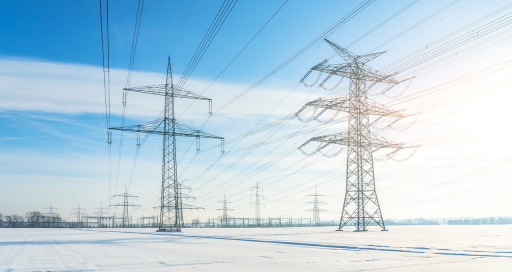
Geographical imbalance is one of the major challenges in Germany: most of the electricity is produced in the north, while consumption is concentrated in the south, primarily in Bavaria and Baden-Württemberg. This creates a need for vast long-distance transmission infrastructure, such as SüdLink, SüdOstLink and NordWestLink.
Germany’s central role in Europe
Germany is connected to each of its neighbours via high-voltage lines, making it a hub in the European electricity market, which therefore plays a strategic role in cross-border trade. To achieve its climate ambitions and maintain a reliable supply, Berlin has established a detailed schedule for expanding the network.
“Close cooperation [between all the stakeholders] is the only way to meet the challenges facing the network”
This network development plan, drawn up by the TNOs under the coordination of the Federal Network Agency, lays out a roadmap to carbon neutrality by 2045. It is the result of detailed forecasts, public consultations and a strict regulatory approval process.
“The new coalition government has made modernisation of the network a national priority,” says Frank Westphal. “That involves not only an accelerated extension of the existing infrastructure, but also intelligent integration between the electricity, gas and hydrogen networks.”
Huge challenges: authorisations and acceptability
Planning high-voltage lines, especially when using high-voltage direct current (HVDC), means negotiating multiple obstacles, including high costs, administrative complexity and local resistance. “An underground HVDC line can cost up to (ten times as much as an overhead line, but is often essential to getting the public on board,” says Frank Westphal.
Despite laws designed to accelerate the process, these projects often take more than 10 years to implement. Environmental assessments and consultation processes add to the delays. The total cost of modernising the network is estimated at more than €100 billion by 2045.
Unlike the transmission network, the distribution network lacks a national development plan. Managed by local operators, it needs to accommodate a growing number of decentralised energy producers (solar, storage, charging stations, etc.). The current priorities are clear: digitalisation, the rollout of smart grids, and the flexibility to integrate new technologies.
Omexom’s key role in major projects
Omexom, the VINCI Energies energy infrastructure brand, is playing a leading role in the transformation of Germany’s network. It is active in the overhead line, substations and underground segments, and is working e. g. on major projects, such as the 525 kV Corridor B, in partnership with Amprion. “This project aptly illustrates Omexom’s involvement in the planning, design and implementation of underground HVDC lines,” explains Frank Westphal. “It will be an essential link in Germany’s future power supply network.”
This project links Heide with Polsum (460 km) and Wilhelmshaven with Hamm (210 km). Omexom’s role encompasses the technical planning and regulatory documentation, along with intersection management and execution planning.
For the VINCI Energies Deutschland Industry & Infrastructure Chairman, successful energy transition in Germany can only be ensured through a collaborative approach: “The Omexom Technology Forum showed that close cooperation between energy suppliers, manufacturers, politicians and the wider community is the only way to meet the challenges facing the network. It’s a collective mission.”
01/15/2026