Securing infrastructure and protecting biodiversity – with tech
Reading time: 3 min
Thanks to drones and AI, it is now possible to inspect high-voltage lines more safely and more effectively while protecting birds and their natural habitats. We look at the example of Omexom in Germany.
As they face the dual imperatives of network reliability and biodiversity conservation, infrastructure operators are having to innovate. Surveillance using drones, combined with artificial intelligence, is proving a practical and effective response to these challenges.
In Germany, Omexom High Voltage offers a fine example in its work on the 380 kV Landsbergen–Borken overhead line, showing how technology and nature conservation can go hand in hand.
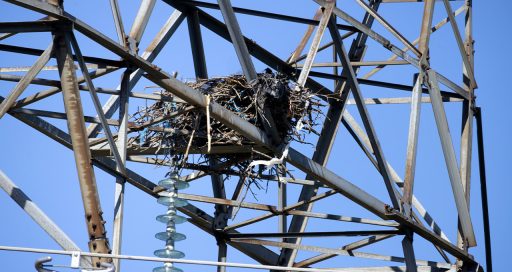
High-voltage electrical lines often span difficult-to-access natural areas. They are also the preferred nesting sites of many bird species.
German law dictates strict protection for many species during their breeding seasons, from 1 March to 30 September. Traditional inspection methods can be time-consuming and hazardous, making it difficult to reconcile regulatory constraints, team safety and the continuity of work.
Up to three flights a week
In response to this issue, since 2025, Omexom High Voltage has been rolling out a digital inspection solution using autonomous drones. Along a 60 km, 140-tower section of the Landsbergen–Borken line, five docking stations provide the platform for BVLOS (beyond visual line of sight) drone flights overseen from a digital control centre.
Drones complete up to three flights a week, capturing high-resolution images from different angles. This data is then analysed by artificial intelligence capable of detecting birds’ nests at an early stage, with human verification in the initial phases.
“The main aim of drone monitoring is to identify obstacles to our work ahead of time”
This approach offers a number of advantages. It allows the teams to anticipate constraints in connection with species protection, plan operations accordingly, and significantly reduce the risks to personnel. “The main aim of drone monitoring is to identify obstacles to our work ahead of time,” says Thilo Gronholz, Sales Manager at Omexom High Voltage.
It also facilitates complete and reliable documentation for maintenance, along with an appreciable reduction in costs and the environmental footprint of these inspections.
Onward to new applications
The project presented some unexpected challenges, including in the acquisition of permits. “The line is 60 km long, too far for line-of-sight flight with a single drone,” explains Thilo Gronholz, speaking of the complexity of long-distance drone flights and the need to install docking stations.
This experience has allowed Omexom High Voltage to consolidate its expertise in drone technologies and their limits, while simultaneously opening the way to new applications.
In future, Omexom High Voltage hopes to create its own drone control centre and expand the potential uses to biodiversity monitoring, thermal inspections and worksite documentation. These advances will benefit network operators and the environment alike, making drone surveillance a key lever for securing infrastructure while protecting biodiversity for the long term.
07/13/2026