With global warming, urban densification and land scarcity becoming increasingly pressing issues, underground spaces may hold considerable promise for our cities. Developers just need to seize the opportunity, as Marie-Claire Barré, Doctor of Urban Planning and Development, and founder of the project-support agency CAPACITé, explains.
©Adobe Stock
How long has underground space been part of the conversation in urban planning?
M.-C.B. It’s a topic that dates back to ancient times (with remarkable underground water cisterns for example, or Leonardo da VINCI’s extensive cogitations on high-level and low-level roadways) and has for centuries consistently featured in philosophical and fictional representations of the urban space. In the modern era, it reappeared in the 1930s as a solution to urban squalor. The Underground Urbanism movement, which originated in the thinking of Eugène Hénard and is embodied in Edouard Utudjian,(2) advocates the use of subterranean levels to underground a number of urban functions, including accommodation. It’s an approach diametrically opposed to that expounded in the Athens Charter, principally associated with Le Corbusier(1) and best known for its guiding principles of “green space, fresh air, and sunshine”.
Since then, the idea of developing underground spaces has returned cyclically. And today with particular acuity, clearly underpinned by environmental concerns. To address the problem of underground spaces inevitably means raising questions of resource and land scarcity, the fight against and adaptation to global warming, how to manage urban densification, the potential of new logistical models, and so on.
Is the subject of underground spaces now framed in terms of “resources”?
M.-C.B. Yes, the subterranean space contains resources that are all too often ignored or overlooked, such as georesources, thermal inertia and usable spaces. But it’s no longer so much about seizing a technological opportunity as about thinking in terms of necessity. Making use of underground spaces is viewed as part of an urban resilience approach in which the invisible land might be a solution to building the compact city, developing urban logistics, or innovating in low-carbon production of heating or cooling. The underground space offers significant prospects.
Are there some iconic architectural projects incorporating underground spaces we should mention?
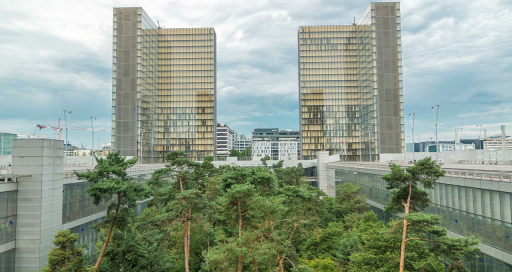
M.-C.B. One of the best known is perhaps the Bibliothèque nationale de France François-Mitterrand in Paris, designed by Dominique Perrault, with its underground levels including an indoor forest. We also have the Ewha Womans University in Seoul and the Olympic Velodrome in Berlin, two more famous projects by Dominique Perrault, who is clearly something of a pioneer in this area.
Besides these iconic examples, are some cities further ahead than others?
M.-C.B. It’s difficult to make comparisons given that the motivations for using underground spaces vary so much from one city to another, and what’s more, the real function of these spaces may have diverged unexpectedly from the original or official intention.
“Underground spaces are still too poorly understood”
In Helsinki, for example, the underground infrastructure was designed for civil protection, because Finland shared a border with the USSR at the time. As they grew, these spaces ended up containing transport, waste and energy infrastructure, but also leisure facilities, places of worship, offices, and even homes. That said, Finland, along with Quebec, with its underground spaces dedicated to commerce and travel, are generally considered the most “advanced”.
Switzerland, a nation of mountains and tunnels, but also of underground bunkers for civil protection, also has a special relationship with underground spaces. In 2023, the Swiss Federal Council adopted a strategy for the sustainable use of underground facilities and a law against urban sprawl to encourage use of the existing underground infrastructure.
And elsewhere? How does France compare, and Paris in particular?
M.-C.B. In 2021, the City of Paris selected some 20 projects from 200 proposed under a second call for projects entitled “Réinventer Paris” with the aim of transforming 31 underground sites in the capital. Most of these projects had a distinct “culture”, “party” or “commerce” flavour to them. The winning project on the Grenier-Saint-Lazare site, created by Sogaris with Syvil Architectures, is particularly interesting in this respect, in that it involves changing from a parking function to an urban logistics function and presents innovative legal and economic models.
At national level, the Bureau of Geological Research and CNRS launched a priority research programme and utilities scheme (PEPR) entitled “Sous-sol, bien commun [lit. Underground space, a common good]” in early 2023. Under the third part of the programme, which relates to the sustainable underground city, a programme specific to Paris launched in 2023 with a budget of €3 million over seven years and involving partners such as the Ecole nationale des ponts et chaussées, RATP, Paris-Saclay University, CETU, and the Métropole du Grand Paris. The scope of the study matches the extent of the Grand Paris Express project and explores the possibilities from ground level to 100 metres down.
Are developers really on top of this subject?
M.-C.B. Let’s say that the conversation is ongoing and that here and there, we do see demonstrators emerge – some rather innovative – involving underground spaces. But beyond these expressions of inventive land use, the real challenge is reproducibility, which now has a number of obstacles to overcome.
What are they?
M.-C.B. There are many different kinds. Of course there are financial barriers. Legal provisions also sometimes make development rather complex. Most networks depend on highway laws, and legally speaking, ownership of the surface extends underground all the way to the centre of the Earth. This means that underground infrastructure that didn’t match the surface infrastructure’s footprint would soon run into administrative problems. Also, because legislation is constantly changing, developers have to remain highly vigilant, particularly where safety is concerned (room sizes, emergency exits, etc.).
Another major obstacle exists in the fact that underground spaces are not properly covered in urban planning documents. Even at shallow depths, there are few maps or 3D models, and the layout of technical networks is not always known. Given the lack of joined-up cartographic resources, we would need to define a national framework for cataloguing underground spaces and their uses. That is actually one of the objectives of the “Sous-sol, bien commun” scheme.
More generally, underground spaces are still too poorly understood to bring about a global vision and strategy, which are needed to consistently link the different possible uses.
*The Athens Charter takes its name from a 1943 Le Corbusier publication following an International Congress of Modern Architecture in 1933, which took place abord a ship bound for Athens from Marseille. It sets out the guiding principles of functionalism in architecture and urban planning.
**Underground urbanism has its roots in the thinking of Eugène Hénard, an early 20th-century Parisian architect who between 1903 and 1910 theorised a rational organisation of urban infrastructure in layers – technical networks, traffic, services, etc. – freeing up the surface for pedestrians and green spaces. But it was Edouard Utudjian who gave the movement its institutional form. In 1933, he founded GECUS – the Study and Coordination Group for Underground Urbanism – the first international organisation entirely dedicated to this discipline. An architect and urban planner, Edouard Utudjian proposed the idea that the urban underground is not a residual or purely technical space, but an entirely plannable resource that should be mapped, governed, and incorporated into wider urban planning approaches. He published Urbanisme souterrain in 1952 and championed this approach until it largely faded from view at the dawn of the 1970s.

Marie-Claire Barré is an urban planner who obtained her doctorate from the École nationale des ponts et chaussées in 2001. Her career includes research (at LATTS), working at major urban services groups (such as Suez) and local authorities (Dunkirk in northern France), professional association, urban project management (with the architecture and urban planning agency Richez_Associés, now landForma), and training (with CNFPT).
In 2020, she founded the agency CAPACITé, which she now directs, an organisation based on cooperative processes between stakeholders, business incubation in complex fields, planning, and design.
On the theme of urban underground spaces, she led a feasibility study for the Underground Spaces and Transitions Committee at AFTES, the French association for tunnels and underground spaces, with a view to presenting its findings to the RGC&U (civil and urban engineering network) steering committee at the French Ministry of Ecology.
Her most recent contribution on the subject is a study commissioned by La Fabrique de la Cité (VINCI Group), published in October 2024 entitled Les promesses du sous-sol pour une ville durable [lit. The potential of underground spaces for a sustainable city]. This study assesses the potential of underground spaces in France and reviews the long history of underground urbanism.
To find out more
In summary
- Underground spaces are potentially a strategic resource for meeting the challenges of urban densification, land scarcity, and adaptation to climate change.
- There are multiple potential applications: urban logistics, transportation, energy, geothermal energy, thermal storage, and new urban uses.
- Cities such as Helsinki, Montreal and Paris are already experimenting with underground development models to enhance urban resilience.
- France is accelerating research in this area with its national “Sous-sol, bien commun” programme and a number of pilot projects in Greater Paris.
- The biggest challenge lies in scaling up the approach in the face of legal, financial and regulatory barriers, exacerbated by an inadequate awareness of urban underground spaces.
11/02/2026