In France, RTE recently announced a programme to renovate 40,000 km of high-voltage and extra-high-voltage lines between now and 2040. The aim is to adapt aging infrastructure to the energy and climate transitions. The network operator is working with trusted companies including VINCI Energies, its second-largest partner in terms of business volume.
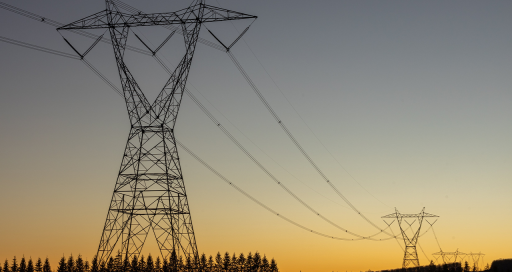
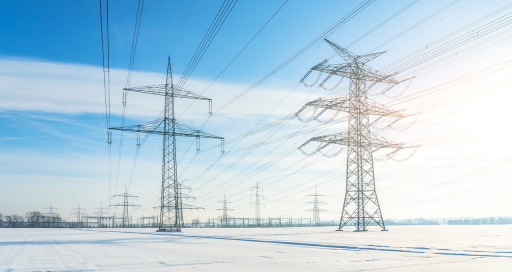
With 106,000 km of cables and 280,000 towers linking together the whole of France, this high-voltage (63,000 and 90,000 V) and extra-high-voltage (225,000 and 400,000 V) power network represents a key national asset. It collects most of the energy produced and transports it to where it is consumed, interconnects national businesses with their counterparts in neighbouring countries, and powers every industry sector.
Constructed in France at the end of World War II and consolidated in the 1960s and 1970s to accommodate high-power facilities including nuclear sites, the network boasts a number of clear advantages: it is relatively uncongested, transmits large quantities of electricity every day, and is currently financed at low cost.
But it is aging: 27% of its overhead lines (which make up 90% of the network) are more than 60 years old, and almost 65,000 of its towers are between 70 and 105 years old. In the future it will have to cope with increased electricity demand due to energy transition and will also face intensified climate risks. The same challenges face all developed countries, including France’s neighbours the United Kingdom and Germany.
A €94 billion plan
“Today’s existing network is well-suited to a France in which electricity represents just over a quarter of its energy needs,” according to RTE, the national electricity transmission network operator. “Increasing the contribution of electricity to more than 50% of those needs will obviously require investment.” And substantial investment at that. On 13 February 2025, RTE unveiled a modernisation programme costed at €94 million. It will be a massive project, requiring work between now and 2040 on 40,000 km of cables and the replacement of 500 km along with 85,000 towers.
To implement this plan, RTE elected to enlist partners through a five-year framework contract, which runs until late 2026. A new contract will be introduced in 2027, reportedly covering a period longer than five years.
Whatever the contractual terms, the vital nature of the project requires trust relationships with the partner businesses. “The installation of extra-high-voltage lines requires advanced technical expertise, heavy equipment and fluid interactions with the national operator,” explains Guillaume Tô, Director of Overhead Lines Projects at VINCI Energies, RTE’s second-largest partner in terms of business volume.
Vulnerable infrastructure
The RTE plan is based on three major strategic pillars. The first involves revamping the network and adapting it to climate change (+4 °C in 2100). In the wake of the major storms Lothar and Martin in 1999, which levelled a quarter of the French national network, RTE transformed its infrastructure to withstand winds of 180 kph. But the system remains vulnerable to heatwaves, which are becoming more frequent and more extreme.
“The installation of EHV lines requires advanced technical expertise, heavy equipment and fluid interactions with the national operator.”
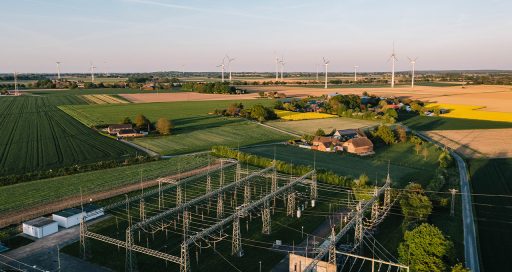
The programme’s second objective is to connect consumption with major industrial sites, data centres and new low-carbon production facilities, including the six new EPR reactors and the future offshore wind farm, whose capacity is expected to reach 18 GW by 2035.
Third, the modernisation plan announced by RTE is designed to strengthen the backbone of the high and extra-high-voltage network. “It’s about receiving and redistributing larger electricity flows and limiting congestion,” says Guillaume Tô. “The new high-power means of production (nuclear, offshore wind, etc.) will mainly be concentrated in western France. To move the surplus electricity to other regions and neighbouring countries, transport capacity needs to increase.”
Local expertise
To carry out its mission for the distributor, VINCI Energies is drawing on the expertise of two local business units – Omexom Nîmes Lignes Aériennes and Omexom Thiers Lignes Aériennes – which operate nationwide. “RTE currently represents 70 to 80% of our activity,” says Guillaume Tô. “Over the past three years, we have had to expand our workforce by 10 to 15% a year. The network modernisation programme is helping sustain our growth momentum.”
01/15/2026