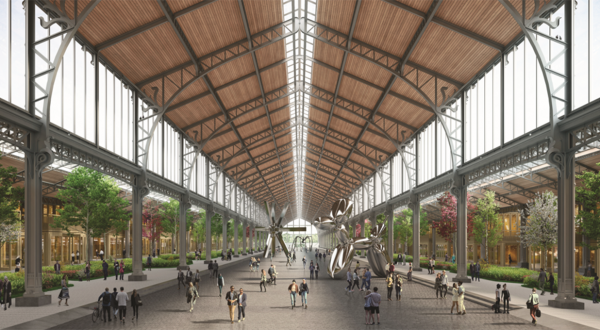
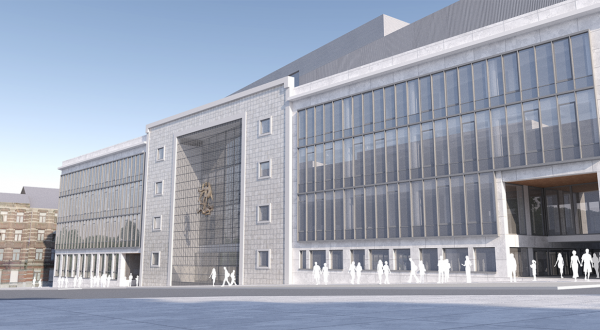
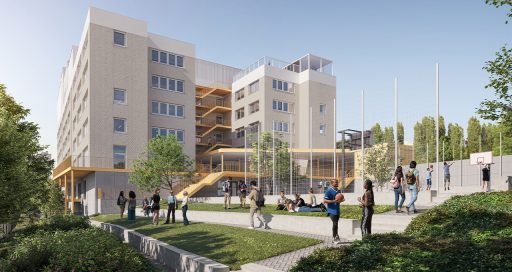
Renovation is emerging as the primary driver of the European tertiary property sector. Energy constraints, investor expectations and new uses are transforming aging offices into comfortable, modular and economical spaces.
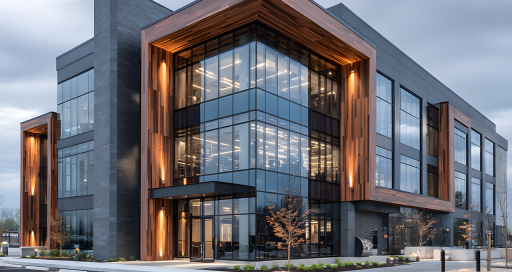
Having long played second fiddle to new construction, renovation is now emerging as the driving force in European building. With mounting pressure from environmental, economic and land constraints, it is becoming the norm for investors and operators, particularly in tertiary property.
According to the market forecasting network Euroconstruct (2024 report), renovation now represents more than 50% of building activity in Europe – an unprecedented level. In France, the French Federation of Building (FFB) states that the market share for new builds fell to 43% in 2024, leaving renovation and maintenance to make up the remaining 57% of total building activity. In less than a decade, the trend has reversed, with renovation now preferred over rebuilding.
Decisive regulatory stimulus
This shift is primarily both structural and regulatory. The new European Directive on the energy performance of buildings (EPBD, 2024) dictates the gradual renovation of existing building stock in order to achieve carbon neutrality by 2050. The text requires 16% of the tertiary building stock in member states to be renovated by 2030, and 26% by 2033.
In France, the Tertiary Eco Energy Decree sets ambitious targets: 40% lower energy consumption by 2030, 50% lower by 2040, and 60% lower by 2050. These obligations are encouraging property owners to reassess their assets or risk seeing them decline in value.
Renovation, reversibility and reuse: these “three Rs” are currently redefining the tertiary property landscape.
Financial markets have rapidly absorbed this change. According to the consultancy CBRE (European Real Estate Market Outlook 2024), property funds are now prioritising “core green” assets, often renovated, since these more easily meet ESG criteria and retain higher resale value.
“In Paris La Défense, close to a million square metres of offices are aging or already obsolete,” Paris La Défense CEO Pierre-Yves Guice told France Media Business in November 2024. “The modernisation of these 250,000 sq. metres and their commercial success prove the economic reality of restructuring old building complexes.”
CAPEB (Cahiers de tendances no 1) observes that 70% of tertiary building stocks date from before 1980. In a context where land is scarce, the French National Institute of Statistics and Economic Studies (Insee) notes that in half of all cases in dense urban environments, it would be more costly to demolish and rebuild than to renovate. The result is that repositioning or repurposing projects (offices transformed into housing, hotels or community facilities) are proliferating.
Change driven by use
Another dimension of these changes is that since the Covid‑19 crisis, businesses have been reinventing their office spaces. According to the CBRE European Office Occupier Sentiment Survey 2023, 60% of organisations plan to reduce their portfolio of offices and to prioritise modular, collaborative spaces. The market share of individual offices has contracted from 51% in 2021 to 40% in 2024.
Comfort remains key to attracting employees, with modern amenities and welcoming spaces. Energy efficiency and functional simplicity also guide decision-making, with renovation and repurposing preferred in central areas.
Renovation projects make it possible to incorporate these uses without starting from scratch. Renovation, reversibility and reuse: these “three Rs” are currently redefining the tertiary property landscape. The transformation of tertiary building stocks illustrates the conviction now shared by all stakeholders: that the future of building is no longer about construction but renovation.
02/16/2026