

Climate change is radically transforming heating, ventilation and climate control (HVAC) needs in buildings. In the face of heatwaves, increased energy consumption and new environmental regulations, HVAC technologies must become more efficient, more resilient and more sustainable than ever.
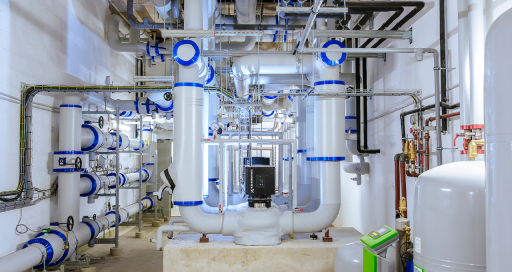
Climate change is upsetting the balances on which building design used to rely. In particular, HVAC (heating, ventilation and climate control) systems are at centre-stage in this change. Previously built for relatively stable climate conditions, they must now be adapted to a world where heatwaves, mild winters and extreme weather events are becoming the norm.
Just a quarter-century ago, Belgian engineers were designing cooling systems based on an exterior temperature of 30 °C and relative humidity of 50%. Today, calculations assume 35 °C and 40% respectively. This five-degree slippage illustrates the scale of the challenge: the cooling load for buildings has increased considerably alongside growing demand for climate-control equipment.
Resilience remains an imperative
This change has a double impact. On one hand, it means increased energy consumption, which equates to more expensive bills and a larger carbon footprint. On the other hand, it is also accelerating technical transformation in the HVAC sector.
To meet this growing demand while also lowering emissions, buildings are now having to use highly energy-efficient systems: variable-speed compressors, geothermal heat pumps, energy-recovery systems, building management systems, and real-time energy monitoring. These solutions make it possible to optimise performance while reducing overall consumption.
In the face of climate change, the building sector can no longer be content to tweak its parameters – it must rethink its whole outlook.
But efficiency alone is not enough – resilience has become an imperative. Building owners and managers have to anticipate extreme conditions such as power cuts, floods and long spells of hot weather. In data centres, hospitals and critical industrial sites, operators are installing emergency power supplies and huge backup wells equipped with rainwater pumps to ensure continuity of service.
The quiet revolution in refrigerants
The fight against overheating in summer poses another major challenge. Modern buildings are being fitted with planted roof spaces, solar facades acting as sunshades, and rainwater collection systems, with landscaping designed to provide natural shade. These so-called “passive” methods complement the technological solutions and help to maintain comfort indoors without additional energy consumption.
And sustainability in HVAC systems is undergoing a quiet revolution in the use of refrigerants. New European regulations on fluorinated gases enacted in March 2024 are driving the gradual disappearance of cooling fluids with high global warming potential (GWP). A few years from now, the use of refrigerants with GWP higher than 150 will no longer be permitted. The sector is therefore turning to far more environmentally friendly natural alternatives such as propane or CO₂.
In the face of climate change, the building sector can no longer be content to tweak its parameters – it must rethink its whole outlook. HVAC technologies are becoming more intelligent, more energy-efficient and more robust. They embody the convergence of energy efficiency, adaptation to climate change, and environmental responsibility.
This transformation represents an opportunity to design buildings that are truly sustainable and able to offer comfort, safety and performance in a changing climate.
03/16/2026