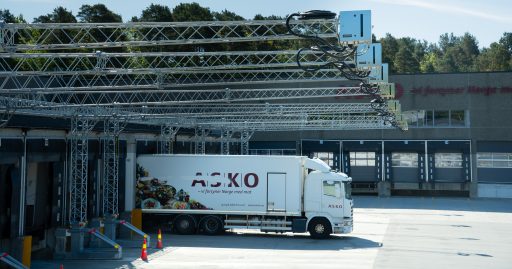
The E-ChargePredict solution cross-references traffic data, population profiles and the competitive landscape to find the best locations for future electric vehicle charging stations.
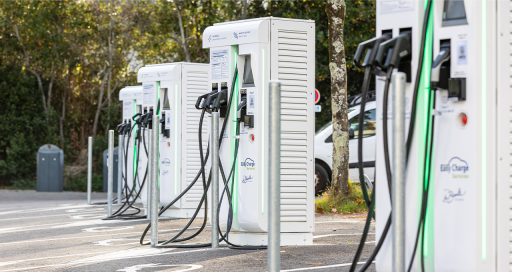
©Brunet-Monié Photographie
Is artificial intelligence about to transform the electric vehicle charging market? Most AI use cases in this area currently involve predictive maintenance for installed charging stations. But what role might algorithms one day play in the configuration of future networks? In fact, we need not look into the future – solutions to identify strategic locations for EVCI (electric vehicle charging infrastructure) installations, estimate the long-term ROI of different charger types, and adjust pricing to maximise returns are all already a reality.
EASYCHARGE, the joint venture between VINCI Energies and VINCI Concessions formed in 2017 to finance and manage EVCI networks, recently launched a solution that uses AI to estimate future energy consumption by charging infrastructure, based on data gathered from its three networks spanning the entire metropolitan area: Easy Charge Services, AVIA VOLT by EASYCHARGE, and the eborn network. This amounts to around 4,000 operational charging points.
“The profitability of a charging station installation project is very directly linked to predictions of consumption by its future users,” explains Mohamed Belahrach, a developer at EASYCHARGE. “It’s therefore essential for us and our investment partners to be able to predict our market share in each geographical area in the short, medium and long terms, i.e. 15 to 20-year contract durations.”
15 to 20-year consumption forecasts
The tool has been designed around a combination of three scientific approaches: estimating demand within a fine spatial grid, predicting changes in demand, and algorithmically identifying the most strategic locations within the communal network.
“To offer the best possible value proposition and to maintain total ownership of the solution”
But how does it actually work? Automatic learning (machine learning) models train themselves by cross-referencing data from a diverse set of sources (percentage of electric vehicles on the roads, commercial presence and coverage, median revenues, layout of the road network) for each geographical area with consumption data from EVCI networks. The consumption calculations are then extrapolated over 15 to 20 years of operation in order to identify locations for charger installations, ranked from most to least attractive.
This solution also enables station operators to compare the most optimistic traffic predictions made two or three years ago with current electric vehicle adoption rates.
Eight months’ incubation at Leonard
“When we launched this project, there were very few solutions on the market,” says Eric Mendels, Business Unit General Manager at EASYCHARGE. “But the market is now becoming saturated, reflecting a real need. Our mission to develop a proprietary solution is driven by two objectives: to offer the best possible value proposition; and to maintain total ownership of the solution, from architecture to data.”
EASYCHARGE took advantage of eight months’ incubation at Leonard, the VINCI Group’s future-oriented innovation platform, to fine-tune its modelling solution. The E-ChargePredict solution is now fully functional and ready for activation across the entire metropolitan EVCI network under VINCI management.
Like many AI-based solutions, E-ChargePredict can continuously improve its performance thanks to its learning algorithm, making the solution increasingly fast, robust and easy to use. “For now, this is a tool by and for the VINCI Group,” says Eric Mendels, “but we certainly intend to expand its commercial scope in future. For instance, it could soon be adapted to the needs of the heavy-goods market. Our intention is to continue developing the tool to work at pan-European scale.”
09/10/2026