
Still considered a marginal concept just a few years ago, the reuse of building materials and equipment is now a major lever for ecological and social transition. It is creating jobs, creating new business sectors and redefining construction practices.
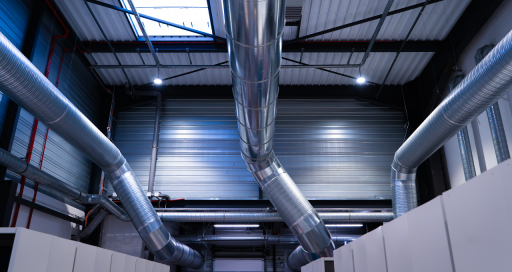
©Arthur ETIENNE
In 2020, the reuse of technical equipment from building was still largely seen as marginal, even anecdotal. But since then, an inescapable reality has become clear: the potential for reducing Scope 3 [indirect greenhouse gas] emissions far exceeded that of direct emissions and energy consumption in Scopes 1 and 2, by a factor of almost 100. With this fact established, inaction was not an option.
Involving the entire value chain
VINCI Energies Building Solutions in Ile-de-France made this commitment gladly, without waiting for the implementation of the RE2020 regulation, the EU Taxonomy, customer demand or supplier offerings.
There was a clear will to act, to involve the entire value chain, and to move more quickly.
Initial actions were focused on low-carbon design and identifying low-impact equipment-purchasing chains. With each exploration, new solutions emerged. They were no more costly and no less effective, but did show more collective intelligence and engineering.
At the VINCI Environment Awards in 2021, a site supervisor suggested reusing cable trays. The idea was duly fine-tuned, structured and implemented. The reclamation of equipment via RESO Services, followed by its reintroduction into the supply chain for business units, showed that the model was feasible. That success has spread, and many other materials can now be reused, reconditioned or retrofitted.
A business framework that empowers audacity and anticipation
A dozen different streams are now in operation in a VINCI-level framework with Backin, the VINCI solution for large-scale reuse of materials on sites.
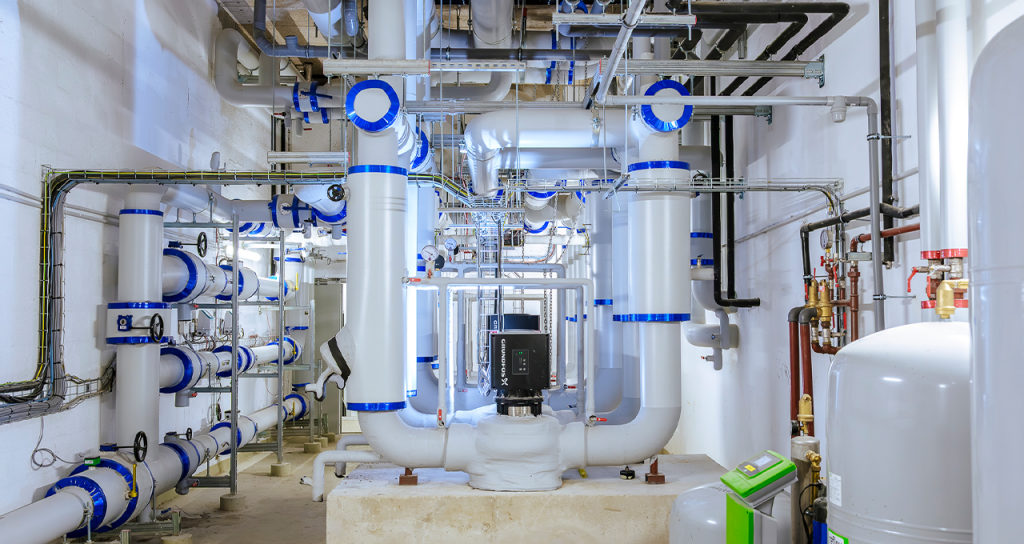
A reuse chain is more than a technical process: it requires a mechanism for identifying potential resources, removal procedures, reconditioning, traceability, insurance, storage, and a system for making materials available for new projects.
This organisation required tangible investments, such as doubling the size of the warehouse and recruiting dedicated project managers. Economic balance is yet to be achieved, but this medium-term vision is made possible by a business framework that empowers audacity and anticipation.
One of the pillars of a fair, value-creating and deeply human environmental transition.
Project owners are now engaging with this approach. A renovation no longer begins by blindly stripping the site, but with an initial review of what to keep, what to reuse, what to transform.
So, is reuse still merely anecdotal? Perhaps in the short term. But in 2025, it will have enabled Building Solutions contracting businesses in Ile‑de‑France to eliminate around 1% of their upstream Scope 3 emissions.
However, it would be a mistake to reduce this dynamic to a simple percentage. Because everything required for exponential scaling-up has come together: customers are convinced; chains are tried and tested; business units are ready. But also because reuse adds major social value.
Useful for the planet and for society
In economic terms, €10,000 of new materials costs the same as €10,000 of reused materials. The difference lies in their contents: choosing new primarily mobilises materials and energy; choosing reused material creates jobs.
That one percent mentioned above has generated 100,000 additional hours of work, equivalent to 60 full-time jobs. The result? Collective pride in work that is useful for the planet and for society
This social value is not yet included in the criteria for comparing contract bids. But there are grounds for optimism: this recognition will come. Reuse is no mere anecdote. It is one of the pillars of a fair, value-creating and deeply human environmental transition.
09/10/2026