A pilot project for accelerated electrification in The Netherlands
Reading time: 5 min
In The Netherlands, an accelerating energy transition has prompted TenneT, the electricity transmission network operator, to modernise at full speed. With the Bay Replacement Programme and the Goor pilot project being managed by Omexom, the objective is clear: to build more quickly, more safely and more sustainably in support of the country’s electrification.
©VINCI Energies
In The Netherlands, the energy transition is gathering pace, requiring rapid adaptation of the high-voltage network. In the face of constantly growing demand for electricity, the electricity transmission network operator TenneT has launched the Bay Replacement Programme (BRP). The aim is to renovate obsolete electricity substations as quickly, safely and sustainably as possible while maintaining supply continuity.
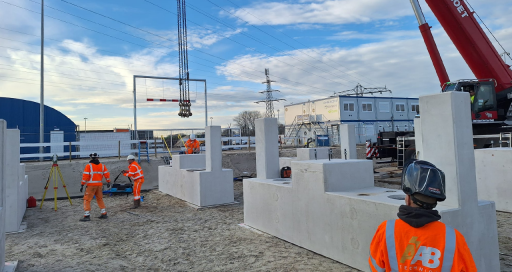
To manage projects in this innovative programme – the Goor substation in the east of the country – TenneT appointed Omexom, the VINCI Energies energy infrastructure brand. This project is a fundamental step illustrating the method based on standardisation, digitalisation and integration.
Building faster and smarter
The BRP is based on a fundamentally industrial approach: to design modular, standardised substations with prefabricated components installed on skids. This method considerably reduces the installation time, minimises substation shutdowns and makes optimal use of human resources at a time marked by a shortage of qualified technicians.
As Eddy Barelds, the BRP programme manager at Omexom, explains: “Omexom is reducing execution times and personnel requirements through the standardisation of substation design, integration of the engineering and execution phases, and the use of digital tools for planning and training. This rationalises workflows, reduces complexity, and allows the efficient allocation of resources across multiple BRP sites.”
Integrated method
But the Omexom approach is about more than operational efficiency. It is based on an integrated vision of project management, combining technical expertise and close collaboration with all stakeholders. This philosophy is enshrined in a framework agreement governing the replacement of 145 high-voltage substations by five companies, including Omexom, selected by TenneT.
Eddy Barelds highlights the added value from this organisational model: “Standardisation simplifies the design, provision and execution, reduces delays and improves the predictability of these projects. Omexom is applying this standardised BRP concept to the 110 kV Goor and Nijverdal substations, largely thanks to consistent arrangements such as the twin-GIS* configurations and centralised service buildings. Extremely close collaboration with the other partners [in the framework agreement] and TenneT teams encourages communication and the sharing of responsibilities, which maximise the lessons learned from each project.”
This cooperative dynamic accelerates innovation and helps to establish a process of continuous improvement: “This approach enables us to build more quickly and remain flexible. We will apply the lessons learned from Goor to future BRP projects. This creates a process of continuous improvement.”
Sustainable commitment
The BRP is not just a response to technical imperatives. It is also contributing to far-reaching environmental ambitions. By reducing on-site traffic thanks to prefabrication, replacing diesel with electrical power, and optimising the use of materials, Omexom is helping to limit the carbon footprints of these projects when possible.
“The Omexom approach will enable us to complete the Goor project more quickly without compromising reliability”
“Omexom’s BRP strategy supports sustainable development by proactively aligning with changing legal requirements for environmental permits,” says Eddy Barelds. “We are also pioneers in terms of construction methods, challenging our customers in these areas.”
A pioneering project
Work commenced on the Goor substation in May 2025, with the new station due for handover in late 2026. The final phase, which includes the modification of the old installation and transfer of the lines, will be completed in May 2028. This tight timescale illustrates the technical and organisational challenge facing Omexom as it works to a, for the client and Omexom, new international standard (CEI 61850) while managing a time-limited network outage and training its teams to apply these innovative new methods.
Despite these constraints, Omexom has the ability to meet the project deadlines and consolidate its role as a strategic partner to TenneT. As Stefan Biesheuvel, the BRP Goor project manager at TenneT, puts it: “The approach based on these Omexom solutions and their excellent collaboration, from the efficient construction to the digital preparation, will enable us to complete the Goor project more quickly without compromising reliability. This makes Omexom a valuable partner for this project, the BRP and the energy transition.” (2)
Long-term vision
In The Netherlands, the Goor project is an initial milestone: over the next 10 years, 145 substations will be modernised under the BRP. Omexom expects to complete around three substations a year for TenneT, making a crucial contribution to the evolution of the Dutch electricity network. With this innovative method combining standardisation, digitalisation, sustainability and collaboration, Omexom is showing that it is possible to meet the challenges of energy transition with reliable and responsible construction.
*High or medium-voltage electrical installations with a gas-insulated switchgear housed in a sealed metal enclosure configured in a dual system (Twin-GIS) for a more reliable substation solution thanks to the two GIS available in parallel.
06/18/2026