Long overshadowed by all-electric solutions, bioenergies are now emerging as a crucial factor in France’s energy transition. Political ambition, agricultural constraints and technological maturity, largely focused on methanisation, have brought the sector to a major turning point.
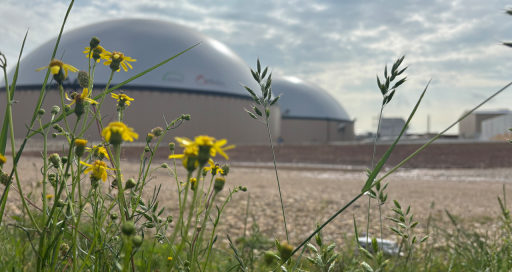
When it comes to energy transition, the public discourse tends to focus on electricity, with bioenergies at best an afterthought. And yet they are a pillar underpinning many national strategies. Obtained from a range of biomass sources (wood, agricultural residues, organic waste, etc.), bioenergies take the form of heat, electricity, biogas/biomethane and other biofuels. In France, for example, bioenergies currently provide 150 to 170 terawatt hours (TWh) a year, or just over 10% of final energy consumed.
Between now and 2050, energy transition will rely on two complementary measures: massive electrification of uses and a huge increase in the power derived from bioenergies, especially in difficult-to-electrify sectors. French government targets are ambitious: for example, its multi-year energy plan is aiming for up to 44 TWh a year from biomethane by 2030, up from around 15 TWh today.
Worldwide demand for low-carbon gases is likely to exceed 300 TWh by 2050. “Studies published a few years back were citing production levels in the order of 100 TWh from methanisation, 100 TWh from methanation or power-to-gas and 100 to 140 TWh from pyrogasification,” says Laurent Pauchard, Founder and CEO of Méthalac, a VINCI Energies business unit that since 2012 has specialised in the design, construction, maintenance and biological monitoring of agricultural methanisation units. However, initial optimism about the availability of sustainable biomass has since waned. The latest revisions in the National Low-carbon Strategy revise downward the prospects for low-carbon gases, except for methanisation, where the 105 TWh target remains, largely due to its technological maturity and the resources available.
Equivalent to two nuclear reactors
Every year, France produces approximately 245 million tonnes of dry agricultural biomass, mostly destined to become food for animals and humans or to return to the soil as fertiliser, with only marginal quantities used for energy. The additional amount required by 2050 for bioenergies is estimated to be between 30 and 60 million tonnes.
It is therefore essential that the topic is given greater prominence and garners more public support if consistent government policies are to emerge.
“Methanisation is currently the most mature sector,” says Sylvain Masnada, Sales Manager at Méthalac. “As for methanation and pyrogasification, there are pilot projects at various stages of advancement, but large-scale industrialisation is a long way off.”
“Methanisation is currently the most mature sector”
Currently Europe’s second-largest player in this market – after Germany with its 10,000 production units – France has around 1,800 methanisation units, 800 of which inject biomethane into gas distribution and transportation networks. “In 2025, France produced 15.5 TWh from methanisation, the equivalent of two nuclear reactors,” says Laurent Pauchard.
For Sylvain Masnada, another important asset for the sector is its small carbon footprint. “The RED II and RED III European directives effectively require greenhouse gas emissions from the entire biogas life cycle to be at least 70% lower than those from fossil-derived natural gas for new installations. A growing number of installations are also recovering this emitted CO2, for example using it in agricultural greenhouses, or in the agrifood industry in places like breweries.”
Advanced methanisation expertise
A company created in 2012 and specialising in the implementation of biogas projects, Méthalac has developed advanced expertise in methanisation over many years. As Sylvain Masnada, Sales Manager for this VINCI Energies business unit, explains, Méthalac handles the entire biogas production process, “from engineering to installation of the infeed hoppers, and from phase separators* to tanking equipment (heaters, probes, agitators, gasometers, etc.), as well as pipework, process automation, maintenance and biological monitoring”.
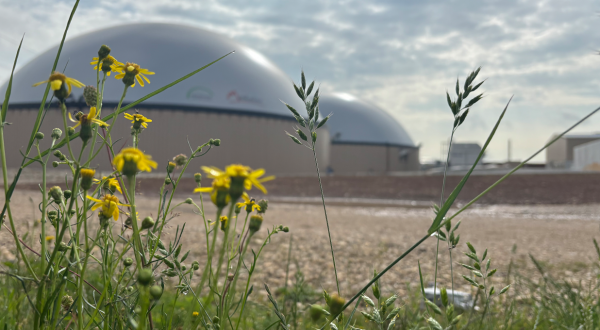
Its recent projects include setting up the methanisation process at MW Bioénergie, a company founded in 2025 in Heyrieux, in southeastern France. One of its flagship projects is undoubtedly Méthamoly, an initiative launched by 12 farmers from the Monts du Lyonnais area in 2019. Its unit processes approximately 22,000 tonnes of organic materials and produces 14.5 GWh of energy a year.
“Méthamoly supplies heating to 2,780 people, as well as a bioNGV station currently serving around 30 vehicles,” adds Sylvain Masnada. “It also generates 20,000 tonnes of digestate, the methanisation residue used to fertilise soil.” Not forgetting a recently added unit used to recover the CO2 emitted. “It’s a true virtuous circle, especially since methanisation is a non-intermittent renewable energy.”
*The phase separator processes the raw digestate exiting the digester, fractioning it into the liquid and solid phases.
10/15/2026