Cultural heritage is more than a shared history – it is a powerful economic, social and regional driver of growth. In France and across Europe, it attracts millions of visitors, creates jobs and energises regions. Our article explains all.
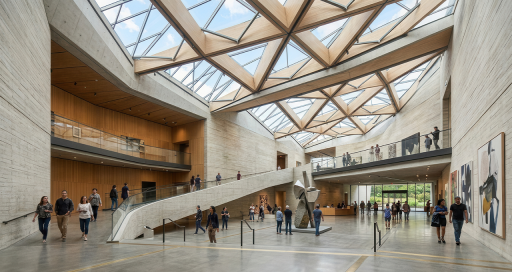
Long seen as shared history to be preserved for its symbolic value alone, cultural heritage is now recognised as a powerful engine for economic, social and regional development. Experts and stakeholders concur: historical monuments, converted industrial sites and intangible know-how are all part of a living capital whose impact reaches far beyond the cultural sphere.
“Economic analysis based on objective indicators (cost-benefit studies, jobs created, local added value, multiplier effects) shows that investment in heritage generates long-term economic effects,” explains Maria Gravari‑Barbas, Professor of Geography at Paris 1 Panthéon-Sorbonne University and Director of the UNESCO Chair in “Culture, Tourism, Development” and of EIREST (interdisciplinary research team on tourism studies). “It stimulates activity, makes regions more attractive and generates tax revenues greater than the amounts invested, as several European studies(1) have shown.”
A powerful boost for tourism
In economic terms, heritage is intrinsically linked with attractiveness to tourists. In 2024, France welcomed more than 100 million international tourists, generating €71 billion in tax revenue. Tourism represents 8% of national GDP and directly supports more than 1.3 million jobs.(2) One in two foreign tourists makes a cultural visit during their stay, attracted by an exceptional network of almost 46,000 protected monuments and close to a thousand recognised museums. And locals are also visiting these attractions: almost 67% of French people(3) visited a heritage site in 2024.
Cultural tourism also plays a central role at European level. Europe welcomed 631 million international tourists in 2024 – 43% of all international tourism.(4) Major cultural capitals, the Mediterranean and cross-border itineraries are the major attractions, with numbers up almost 6% compared with 2023. France, Spain, Italy and Greece are some of the most popular destinations, confirming the continuing attractiveness of European heritage.
A remarkable multiplier effect
Adding a site to the UNESCO World Heritage list generates a considerable economic boost, attracting visitors and stimulating local economies. As of 2025, there are 1,248 World Heritage sites, of which 972 are cultural sites, in 167 different countries. A significant number of these sites are concentrated in Europe, enhancing the continent’s attractiveness and international reach.
“Unfortunately, however,” says Maria Gravari‑Barbas, “culture spending is often considered low-priority because the returns are diffuse, indirect and long-term. At European level, arbitration frameworks favour standardised financial indicators (deficit, immediate profitability, productivity, etc.), which only poorly reflect the social, symbolic and regional externalities intrinsic to the cultural sector.”
And yet heritage spending is subject to a remarkable multiplier effect. Every euro invested in heritage generates direct, indirect and induced economic benefits of between €28 and €31, according to a national study of more than 3,400 monuments.
These figures indicate a far-reaching impact on local economies, largely through job creation. The sector generates approximately 500,000 non-relocatable jobs in France for artisans, architects, engineers, guides, curators and construction workers. Projects supported by the French Heritage Foundation alone create or sustain almost 16,000 jobs a year.
At European level, cultural heritage is a major source of employment: in 2024, 7.9 million people were working in the cultural sector across the European Union – equivalent to 3.8% of total employment. Activities related to cultural heritage (museums, monuments, archives, etc.) are showing sustained growth, confirming their role in regional economic resilience.(5)
Major social externalities
“Beyond tourism, heritage produces major social externalities,” says Maria Gravari‑Barbas. “These include cohesion and collective pride, knowledge and skills transfer, social inclusion, improved living conditions and strong regional attachment. It also increases resilience in the regions as a resource for economic conversion, consolidating social links in crisis periods and providing cultural reference points that promote collective adaptation.”
Heritage helps to revitalise regions and contributes to their attractiveness, as seen in France, for example, with flagship projects such as the Louvre‑Lens Museum and the Centre Pompidou‑Metz, which have sustainably transformed their surroundings.
Innovation and creation
Ultimately, far from being static, heritage assets foster innovation and contemporary creation. Ambitious restoration efforts, such as Notre-Dame de Paris with its new stained-glass windows after the fire in April 2019, show how the dialogue between heritage and modernity can bring about meaningful projects. The European Union, through its Horizon Europe programme, is encouraging the use of cultural heritage as a lever for sustainable innovation and strengthening the European sense of belonging.(6)
“Businesses and engineering experts play a key role in providing innovation, skills and finance: low-carbon restorations, materials reuse, digitalisation and new tools for adding value,” says Maria Gravari‑Barbas. “As well as their technical input, they also contribute to virtuous social dynamics by supporting local jobs, knowledge transfer and projects with local roots, making heritage assets a lever for ecological transition based on energy sobriety and social links.”
(1) Cultural Heritage Counts for Europe: Full Report (2015) – Report on the CHCFE project coordinated by Europa Nostra, European Commission
(2) 2024 Statement – French Ministry of Tourism
(3) Patrimostat Study 2025 – French Ministry of Culture
(4) Tourisme international. Chiffres Clés & Tendances 2024 – UNWTO (United Nations World Tourism Organization)
(5) Culture Statistics – Cultural Employment – Eurostat
(6) Patrimoine culturel européen et les industries culturelles et créatives – Horizon Europe
INTERVIEW
“Heritage is no ordinary resource”
How can cultural heritage be protected in a time of ecological, technological and social transition? Patrizia Riganti, Professor in Tourism at the University of Glasgow, explains key principles for the responsible management of heritage assets seen as cultural capital to be transferred through time.
Given the numerous current challenges, what are the principles that should guide heritage preservation and enrichment projects?
P.R. The first requirement is conceptual clarity. Heritage exists when a community recognises that an asset holds shared cultural values and chooses to pass it on. This recognition is fundamental to the idea of heritage as cultural capital in the sense defined by David Throsby(1): a stock of cultural value that generates benefits, both commercial and non-commercial, over time. Heritage, like natural capital, is fundamentally a unique, non-renewable resource, difficult to replace and with risks of irreversible damage. This primarily affects physical heritage, which degrades over time.
And intangible heritage?
P.R. Some forms of intangible heritage, such as cultural practices and collective memory, can be renewed if they are consistently transmitted onward. Even where adaptations or innovations are possible, complete substitution is rarely acceptable for assets defined by their authenticity and contextual value. Three principles follow accordingly: 1) intergenerational and intragenerational equity, in order to ensure access to cultural benefits today without compromising their transmission; 2) rigorous assessment of management options, incorporating all the social benefits, including the value of non-use, using mechanisms based on collective preferences; 3) integration of the ecological transition, because climate risks directly affect the durability of heritage assets, while their conservation supports inclusive local development.
Are technological innovations transforming the preservation and enrichment of heritage?
P.R. Yes, but their effects depend on how they are used. Digital tools and energy innovations are improving preventive conservation, risk management and long-term planning. However, their effectiveness cannot be assessed solely using technical indicators. It must be considered in light of their capacity to enhance the sustainable management of cultural capital and to preserve the benefits linked to use and non-use, which are fundamentally what drive heritage preservation.
What should be the guiding principles for partnerships between public stakeholders, experts and businesses?
P.R. These partnerships are necessary for ecological and digital transition, but their legitimacy resides in their capacity to create sustainable public value, not short-term gains. Community involvement is essential, especially in a context where regulatory frameworks may be weakened.
They should be structured around three principles:
- the recognition of heritage as a non-renewable resource, meaning clear limits on the acceptable compromises;
- a transparent assessment of management strategies, based on solid data and including economic, social and environmental factors;
- an ethically responsible approach in the private sector, aligning innovation and investment with culture, authenticity and public confidence.
Well-designed partnerships can thus reconcile contemporary uses, environmental performance and the preservation of cultural capital as a public good.
*Emeritus Professor of Economics at Macquarie University, Sydney, David Throsby is well known internationally for his research and numerous publications on the economics of the arts and culture.
Cultural heritage in figures
67% of French people visited a heritage site in 2024
100 million international tourists in France in 2024: €71 billion in tax revenue; 8% of national GDP; 1.3 jobs directly created, including 500,000 non-relocatable jobs
631 million international tourists in Europe in 2024 – 43% of all international tourism
1,248 UNESCO World Heritage sites in 2025, of which 972 are cultural sites
€1 invested in heritage in France generates €28 to €31 in economic returns
Sources: French Ministry of Tourism, French Ministry of Culture, UNWTO, Eurostat, Horizon Europe
06/18/2026