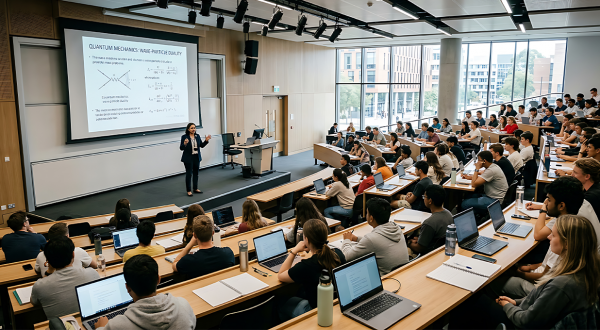
For more than 20 years, Donnie Lygonis has been helping researchers, startups and major businesses transform their ideas into real-world projects. As an innovation strategist for KTH Innovation at the KTH Royal Institute of Technology in Stockholm, he promotes a vision of innovation rooted in experimentation, curiosity and the ability of organisations to reinvent themselves.

©Adobe Express
What do you think are the major barriers to innovation in large organisations?
D.L. The first barrier is often cultural – the fear of failure. Many companies talk encouragingly about innovation but in practice continue to reward efficiency, stability and short-term performance above all else. But experimentation implies uncertainty. Large organisations rarely lend themselves to testing, learning and starting over.
Added to which, there is a structural problem. The better a business’s historical performance, the more it tends to identify with its product rather than its mission. And when the product becomes obsolete, the business disappears along with it. An organisation must therefore be capable of performing its current business activity while also preparing its own reinvention over the next 10 or 20 years.
Financial risk also plays a major role. When a product generates billions of euros, it becomes difficult to invest in more modest or uncertain projects. Businesses prioritise these “sure things” and leave little room for experimentation. But it is precisely this intermediate space between the idea and the massive investment that is missed the most.
What differentiates high-impact innovation from simply a promising idea?
D.L. Impactful innovation is not limited to technical achievements. The real question is: what problem does it solve and how far can uses be transformed? We can often determine from the outset whether a technology simply improves upon what already exists or whether it has the potential to transform an entire sector. History shows that with every major technological revolution, several competing solutions emerge.
It’s not always the best technology that wins out, but the one that creates the most value for the user. The iPhone is a good example: technically, some competitors were more advanced in some areas, but Apple was offering a totally new experience.
Major breakthroughs often arise from a change in perspective. Established businesses naturally seek to optimise what already works. But disruptors completely rethink the user experience, use cases and economic models.
How can we reconcile innovation, social and environmental impact, and economic value creation?
D.L. Setting profitability in opposition to impact is a mistake. A business can and must create economic value while also contributing positively to society and the environment. It should be a simple principle: everything we do should at least leave the world as we found it, and ideally improve it.
“Creativity and performance are inseparable”
Sustainability cannot be treated as an option or side project. It must become a central factor in value creation. Businesses that truly take these issues on board are building stronger relationships with their customers, employees and partners. But this naturally requires effort. As with diversity or quality, it requires changes in behaviour, habits and often the internal business culture. But in the long term, this commitment becomes a driver of growth.
What currently are the essential skills for becoming a driver of innovation?
D.L. The key quality is curiosity. In a world where technical knowledge is becoming more and more accessible, the ability to remain open, to learn, and to understand different realities becomes essential.
Universities play an important role, not just in transferring knowledge, but above all in opening minds, encouraging interactions and developing a broader understanding of the world.
What makes individuals innovators is often their ability to step outside their own context. Businesses must encourage this curiosity, listen to ideas, and give their employees the freedom to experiment. Developing an entrepreneurial mindset – even without starting a company – makes people more adaptable, more creative, and better at resolving complex problems.
How can ideas be more effectively transformed into real-world projects?
D.L. Everything begins with experimentation. An idea shouldn’t just be evaluated in a theoretical way; rather it should rapidly be confronted with the real world. You have to test quickly, learn quickly, and accept that failure is part of the process.
Businesses must create spaces where employees can develop and test their ideas with real users. The best feedback often comes from the most curious customers, who are ready to try imperfect solutions and help to improve them. It is also essential to tear down silos and absorb the ideas coming up from grassroots level.
Innovation contests can also be extremely useful, provided the focus is not solely on the proposed solutions, but also on the problems employees have identified.
How can we avoid innovation becoming just another buzzword?
D.L. The term “innovation” is now used for anything and everything. An idea is not an innovation; neither is an invention. Innovation begins when real value is created for the user.
It is therefore essential to develop a common language within the business and to distinguish different types of innovation: incremental, disruptive, organisational, technological, etc. A continuous improvement of 2% a month can have considerable impact in the long term, but it’s not the same as a radical breakthrough. Essentially, innovation shouldn’t be considered an abstract concept, but a response to a clear mission: why do we exist and for whom? What problem are we trying to solve?
Do incremental innovation and disruptive innovation follow the same principles?
D.L. Not entirely. Incremental innovation consists in constantly improving what already exists – correcting problems, optimising processes, serving customers better. It relies on listening to voices on the ground and acting on that information. Disruptive innovation requires a much more fundamental change in perspective. It’s not about improving what already exists but about asking ourselves what happens if we do things differently.
In both cases, remaining close to customers is essential. The most innovative companies are often those that hear not only what users are saying but also what they really feel.
What role can startups play compared with big business?
D.L. Startups are naturally designed to experiment. They are still searching for their model and can evolve rapidly. Big companies are structured for efficiency and performance. When these two worlds work together in an intelligent way, they can form an extremely powerful combination.
Large organisations can offer startups access to the market, resources and customers. Startups in return bring speed, creativity and new ideas. But this collaboration requires each side to understand their differences in rhythm, culture and working practices. For it to work, they need distinct pilot projects, dedicated teams, and time. Startups cannot work for free or wait a year for a decision.
What one piece of advice would you offer managers?
D.L. Give your people the right to fail. Innovation emerges when employees feel they have permission to try things, make mistakes, and learn. Without that confidence, no one will take the initiative.
How can a business remain innovative in the long term without losing its identity?
D.L. It needs to stop defining its identity by its products and identify with its mission instead. Products change; needs change; but a strong mission enables you to constantly reinvent yourself. Businesses also need to ensure there are spaces for reflection and creativity. In organisations obsessed with efficiency, it becomes difficult to take a step back, explore, and simply think differently. And yet creativity and performance are inseparable. Today more than ever, curiosity and openness to the world have become strategic skills.
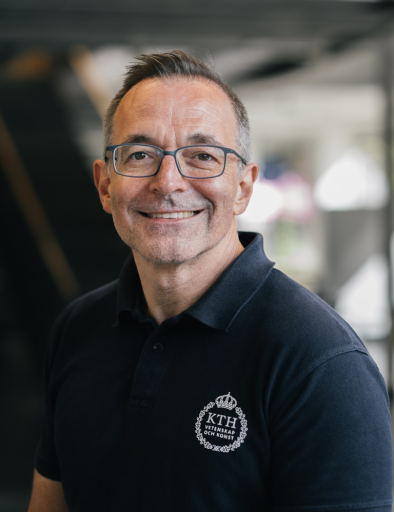
©Patrik Lundmark
Donnie Lygonis is a Swedish entrepreneur, innovation coach and innovation strategist known for his work with KTH Innovation, the innovation support organisation at Sweden’s prestigious KTH Royal Institute of Technology.
Since 2009, he has been supporting researchers, students and entrepreneurs in the transformation of ideas, patents and technologies into viable businesses in areas such as ICT, Deep Tech and Food Tech.
He helped create and distribute the KTH Innovation Readiness Level methodological framework used by thousands of organisations and businesses to guide their innovation projects.
Before pivoting to supporting startups, Donnie Lygonis himself started several companies. He is also a renowned keynote speaker on themes of innovation, creativity and entrepreneurship, with many TEDx appearances to his name.
He promotes a highly pragmatic vision of innovation, emphasising the rapid validation of ideas and the importance of action over theoretical perfection. He is also known for his interest in impactful entrepreneurship, sustainability, and the rapid dissemination of innovations that work.
Find out more
- On LinkedIn https://www.linkedin.com/in/donniesclygonis/
- The KTH Innovation Readiness Level https://kthinnovationreadinesslevel.com
- Creativity and innovation can save the world https://www.youtube.com/watch?v=38ys2Jvd2nc
- Can machines make us more human? https://www.youtube.com/watch?v=qZKsi2_GoqA
11/10/2026