“Draw inspiration from the living world to make organisations stronger”
Reading time: 7 min
For biologist Olivier Hamant, businesses must, given the intense fluctuations of a world in polycrisis, rid themselves of an obsession with performance that is leading them down a dead end. And instead, take the path to resilience.
You champion a business model based not on performance but on resilience, which you believe is the only way to confront the current ecological and economic crises. What does it involve?
O.H. Scientific reports all concur that future decades will be marked by severe turbulence. We’re already there, with heatwaves, megafires, megafloods, resource scarcity and geopolitical crises.
The very first question to ask ourselves is how do we live in this world of hyperfluctuation? Other living things are better than us at adapting to disrupted environments. Why? Because they exhibit resilience, unlike human societies, which are in the process of losing themselves in an obsessive quest for performance and optimisation that leaves them vulnerable to crises.
How exactly do you define “performance” and “resilience”?
O.H. performance is the product of effectiveness and efficiency. Effectiveness means achieving one’s objective; efficiency is doing so using the fewest possible resources. Performance is therefore achieving one’s objective using the fewest possible resources. How? By locking oneself into an excessively narrow channel. Performance works provided the world is stable and abundant in resources and that there are new frontiers to be discovered. In a world like ours today, that only leads to a dead end.
Resilience is the ability to remain stable despite fluctuations. How? By adapting, finding alternative paths, coming up with a plan B, experimenting, questioning. Resilience prioritises questions, while the world of performance is all about answers.
Could we clarify these two concepts with images drawn from the living world?
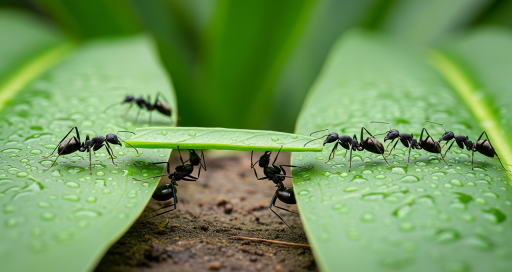
O.H. You might say that the performance approach is the way parasites work. When they inhabit a host, they consume resources and destroy other organisms, and when they have exhausted the host’s resources, they die with it. Resilience is the modus operandi of the reed, which bends to resist fluctuations, or mycorrhizae, which interact and co-evolve with plant roots. It’s the kingdom of cooperation and regulation.
Are performance and resilience mutually exclusive?
O.H. Resilient systems do not preclude the use of performance methods in exceptional cases. Take the human body, for example. At 37 °C, it has plenty of room for manoeuvre to deal with an unexpected fluctuation. But when a pathogen is present, the body’s temperature increases. Counterintuitively, at 40 °C, our immune system becomes incredibly effective due to the fever. But only if it’s short-lived.
Let’s talk about the business world. Is it a research topic in biology or biophysics?
O.H. There is no disciplinary field within biology that is really applied to business. The only natural field that has attracted some interest in social organisations is biomimicry, and that is more often than not reduced to a range of techniques for increasing performance.
“Resilience involves a balance between stability and viability”
However, there is real value in bringing biology and business closer together. Businesses are also systems that function in an organic manner. They are subject to fluctuations, rattled by shocks, and must adapt to survive.
How does the concept of resilience apply to businesses?
O.H. There is unquestionably a growing awareness in businesses of planetary boundaries. Organisations are keen to find a constructive way to address the acceleration and intensification of turbulent events. But beyond the diagnostics, they must decide exactly how and how quickly to enact a shift. And that is less obvious. How do we initiate a paradigm shift not too early but not too late? It’s an enormous undertaking. Migration toward resilience entails production systems that are more local, products that are more adaptable and repairable, supply chains that are more cooperative, and organisations that are less hierarchical.
How might businesses go about that?
O.H. A paradigm shift is no simple thing. While it should signpost a shift toward the world of resilience, management of the energy transition still often involves performance-based methodologies festooned with indicators, targets and KPIs. Goodhart’s Law states that when a measure becomes a target, it ceases to be a good measure. Another adage says “He who hits his target has missed all the others”.
So often, businesses weaken themselves by concentrating their efforts on internal stability; in other words, on risk management. But an internally resilient business, if it is not mindful of its impact on the environment, if it does not seek to interact with its ecosystem and contribute to the viability of its region, will be vulnerable to greater fluctuation than others. Resilience involves a balance between stability and viability
Are some sectors more advanced than others?
O.H. Building has been drawn toward resilience by the scarcity of resources (aggregates, steel, tiles) and regulatory impositions (quotas for biosourced and/or recycled materials, incentives to renovate, etc.) on a particularly extractive sector. This sector has undoubtedly been quicker than many others to usher in cooperative approaches and question its models.
Conversely, the automotive sector is being hampered by counterproductive legislation. The forced shift to electric vehicles, when the outcome is mass production of extremely heavy individual electric cars, is heresy.
What is the role of innovation in transforming models that have been proven over decades?
O.H. To understand how systems, even the most established – especially the most established – are changing, you have to watch the “tiny” changes happening on the edges. Experiments, initiatives: in short, innovation. Here again, we can evoke an image of the living world: flocks of starlings that all at once wheel left, then right. Who makes the decision to change direction? It’s the birds on the periphery of the group, because they are sensitive to external fluctuations. The vast majority of birds in the flock see nothing other than the birds right next to them. They are completely blind to the world and anything changing. For societies and businesses, changes and turns will also come from the periphery.
An apostle of resilience
Studio Concorde – Vivre Ensemble -©YannArthusBertrand
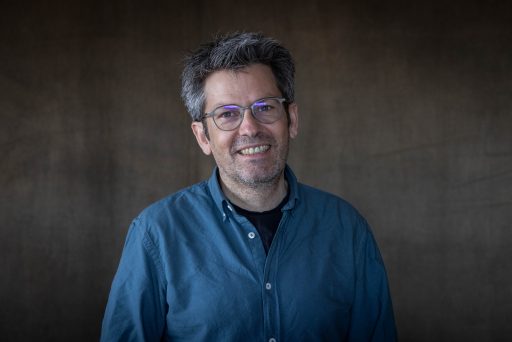
Olivier Hamant is a biologist and biophysicist. A research director for INRAE in the Plant Reproduction and Development Laboratory at the École Normale Supérieure in Lyon, he is also the director of the Michel Serres Institute, an interdisciplinary research group and think tank focused on resources and common goods. In 2023, he published Antidote au culte de la performance, La robustesse du vivant (Galimard), and in 2025, L’entreprise robuste, Pour une alternative à la performance (Odile Jacob).
10/15/2026