The building of tomorrow will be smart, sustainable and user-centric
Reading time: 7 min
From smart buildings and artificial intelligence to energy efficiency and the user experience, Fabrice Montesi, Managing Director of VINCI Energies Belgium Building Solutions, shares his view of the sweeping changes currently redefining the business of building and operating infrastructure.

Digitalisation is radically transforming the building sector. Which innovations do you think will have the most far-reaching impact on building design, operation and maintenance over the next few years?
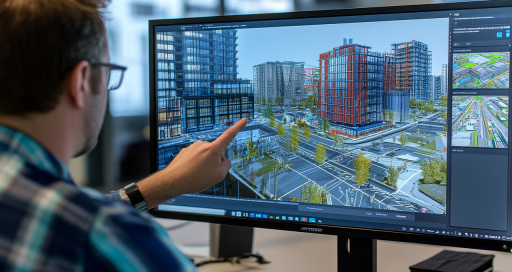
F.M. The biggest innovations in the building sector right now are definitely digital, and focused on the development of smart buildings. They are coming in at every stage of the building life cycle, from BIM (building information modelling) in the design phase, during construction with operational process optimisation, and on into the maintenance phase.
The expansion of digital has now given us access to a considerable quantity of data, which is hugely transforming the way we operate buildings. In terms of maintenance in particular, we’ve moved on from an approach simply based on equipment availability to a much more overarching approach.
Thanks to artificial intelligence, we can now act on energy efficiency in systems, enhance user comfort and well-being, reduce consumption, and develop more collaborative and effective working environments.
How does VINCI Energies Belgium Building Solutions manage to reconcile technological innovation, operational performance and burgeoning expectations in terms of sustainability ?
F.M. In reality, these three dimensions are intimately linked and mutually reinforcing. It’s a true virtuous circle. As buildings incorporate more innovations, they become more sustainable, largely due to a reduction in energy consumption and an improvement in their environmental performance.
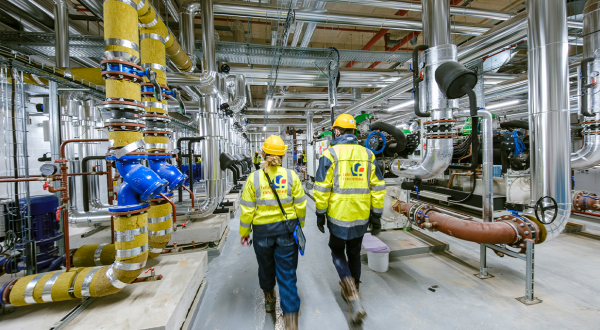
But let’s not forget that the building sector accounts for around 37% of CO2 emissions and almost 40% of energy demand worldwide. In this context, innovation provides a powerful lever for differentiation as well as essential added value in the marketplace. The renovation of the Ellipse Building complex in Brussels, which has been designed to operate without fossil energy, perfectly illustrates this evolution.
Aside from tools and systems, what cultural or organisational changes are necessary for a real and successful digital transformation in the building sectors?
F.M. VINCI Energies has a major advantage in its decentralised model. Each of its business units is in direct contact with its customers and with the realities of its market. Innovations therefore come from the real world and closely match actual needs.
“The building of tomorrow will most importantly be one that is virtuous and user-centric in design”
In addition, the profiles of people working at VINCI Energies, and more particularly at VINCI Energies Building Solutions, have really changed in recent years. Alongside the specialist engineers in our historical business activities, we are now seeing more and more IT experts and technologists with the ability to support this digital transformation.
Buildings are becoming smarter, more digital and more interconnected than ever. How can we ensure these technological advances appreciably enhance the user experience without compromising ease of use, comfort and safety?
F.M. The answer in two words is “customer centricity”. Everything we do begins with the needs and expectations of our customers. This approach is profoundly transforming the way we put together our services. We are developing intuitive, easy-to-use and perfectly integrated solutions, with one clear aim: to enhance the user experience.
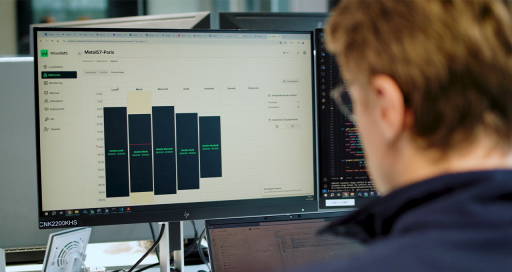
This includes user-friendly applications, which for example allow you to book a meeting room, heat a space automatically before it’s occupied, and manage services such as catering. Our WAVE solution illustrates this approach perfectly. It’s a full-featured smart building management platform that monitors energy consumption in real time and can control all the connected equipment.
What do you believe are the current obstacles to rapid adoption of innovative solutions in the construction and infrastructure sectors?
F.M. The main obstacle is the complexity and fragmentation of the sector, which contains a multitude of different trades and stakeholders. The big challenges are to strengthen interoperability between systems and to standardise processes more. Progress is being made, mostly by capitalising on existing data. However, we still lack a real common language that would allow totally fluid integration between everyone involved.
To what extent can ICT, and more specifically AI, become major levers for accelerating energy and environmental transition in buildings?
F.M. Thanks to the increasing digitalisation of equipment, we now have a considerable volume of data. ICT, and AI in particular, give us the ability to connect, analyse and manage this data, and above all to interpret the content to facilitate faster and more judicious decisions.
AI remains at a relatively early stage in the building sector, as does predictive maintenance. But many promising initiatives are already emerging, for instance, around vibration analysis of equipment and smart monitoring of energy consumption. These solutions can identify malfunction risks in advance and sustainably optimise building operations.
As a manager, how do you stimulate innovation within your teams?
F.M. Innovation is an integral part of our DNA. At VINCI Energies Building Solutions, we take a pragmatic approach centred on practical solutions to our customers’ problems. Our highly decentralised model allows us to remain close to our different ecosystems and encourage grassroots initiatives. We also harness the power of the VINCI Energies network, which promotes the sharing of experience and best practice, including through a variety of themed clubs.
If you had to predict how our sector will evolve over the next 10 years, what would you say the truly innovative building of tomorrow will look like?
F.M. The building of tomorrow will most importantly be one that is virtuous and user-centric in design. It will be fully integrated in terms of connectivity, energy efficiency and digital intelligence. It will also be far more flexible and scalable. Its spaces will be easy to reconfigure for different uses: transforming offices into meeting rooms or cocreation spaces will become natural and easy to do.
In a rapidly changing technological environment, what skills will leaders need to develop if they are to successfully guide innovation in the building sector?
F.M. The essential quality in the leaders of tomorrow will be their ability to connect people rather than simply managing them. Their role will above all be to inspire, to encourage collaboration, and to create synergies both internally and with external partners.
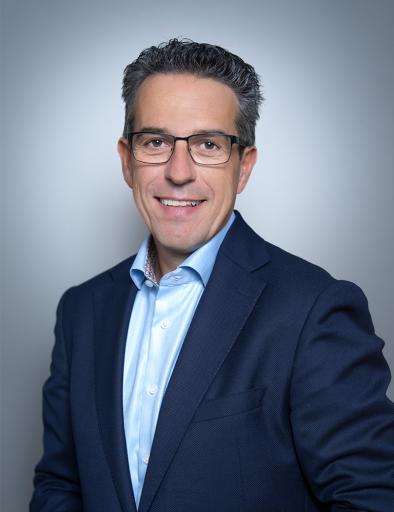
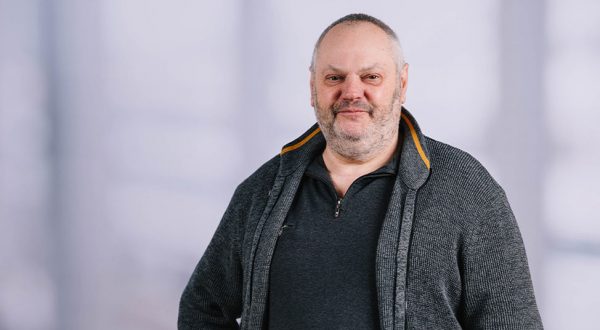
Fabrice Montesi has spent the majority of his career with VINCI Energies in Belgium. He was General Manager Business Unit Projects at Cegelec Belgium, then Managing Director of Televic Audiovisual (Axians) before becoming Managing Director of VINCI Energies Belgium Building Solutions in March 2025.
10/15/2026