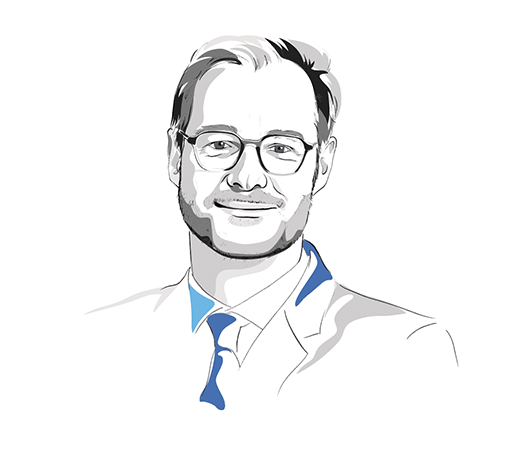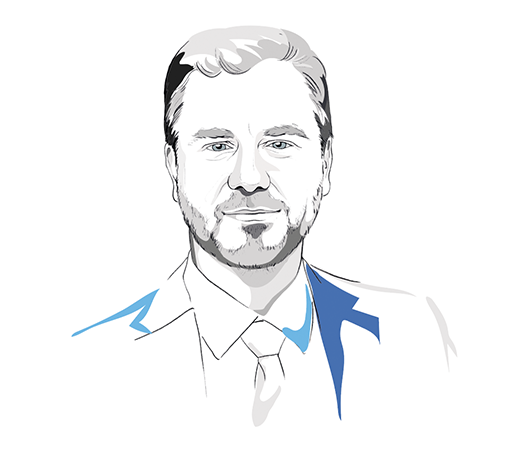

As extreme climate events accelerate and intensify, historical risk-transfer models must change. Insurers and businesses – their customers – alike must be more objective, and must anticipate and prevent more effectively. This means working together, as Blaise Bourgeois, Chief Insurance Officer at Generali France, and Louis Meunier, Insurance Director at VINCI Energies, explain.
According to the World Economic Forum’s most recent annual Global Risks Report, published in January 2026, the three risks business leaders consider most severe for the coming decade are all climate-related. Do you agree with their assessment?
Blaise Bourgeois: In July 2026, Generali published its 2025 report on emerging risks. Cybersecurity retains its place among the major risks, and geopolitical instability continues to be a major cause for concern, but climate risk, which was still considered an emerging risk just a few years ago, is rocketing up the list of concerns.
For the third consecutive year, risk experts have identified climate change as one of the biggest issues. Our Generali Climate Lab, the aim of which is to anticipate changes in climate risks, has this year identified three trends: significant exposure to risks in France; recurring meteorological phenomena on an unprecedented scale; and a climate shift accelerating toward major financial consequences in the absence of adjustments.
Louis Meunier: There is no doubt that climate risk is a major issue, in that it will forever transform regions, supply chains, infrastructure and the very way we do business.
The World Economic Forum report correctly identifies the challenge of linking long-term risks, climate being one of the most significant, with shorter-term risks such as geo-economic clashes, misinformation and disinformation, and the increasing polarisation of society. In other words, the difficulty lies not only in identifying major risks, but also in understanding how they interact. It’s the cumulative impact – both immediate and delayed – that will be the most complex to anticipate and manage.
Given the increasing risk, what other mechanisms should general insurance bring into play?
L.M. General insurance is currently the number-one insurance product onto which climate risks can be transferred. But VINCI Energies aims to build a resilient model before even thinking about transferring risks.
“At VINCI Energies, resilience is based on risk-management strategies shared by all our employees.” Louis Meunier
We have already made significant progress in this regard. At VINCI Energies, resilience is based on risk-management strategies shared by all our employees. At the operational level, because that’s where risks are identified: at grassroots level, in the reality of our business activities and those of our customers. And at organisational level, in every function that has to manage risk: insurance of course, but also finance, legal, human resources, communications, etc.
Is prevention becoming an essential element in risk management?
B.B. It is becoming a new link in our value chain. That’s evident in our proactive approach in terms of analysis and a minutely detailed understanding of the risks, including through our Generali Climate Lab, launched in 2015 and involving actuaries, climatologists and data scientists, to refine our knowledge of climate risks, disseminate our understanding of those risks to the widest possible audience, and roll out suitable prevention solutions.
L.M. Prevention is driven by forward analysis. The VINCI Group, through its innovation platform, Leonard, is using forecasting to tackle the theme of adjusting to climate change. A working group was formed of 27 VINCI members who represent the issues facing different entities, including some insurance department directors.
This initiative helped to enhance the Group’s proficiency in identifying challenges specific to each business activity. This led to concrete actions, such as the response to the business-unit consultation process under the third French national plan for adjusting to climate change (known as PNACC) and the publication of Adapting to climate change: united in facing the challenge of the century.
Given the increasing risk, what other mechanisms should general insurance bring into play?
L.M. General insurance is currently the number-one insurance product onto which climate risks can be transferred. But VINCI Energies aims to build a resilient model before even thinking about transferring risks.
We have already made significant progress in this regard. At VINCI Energies, resilience is based on risk-management strategies shared by all our employees. At the operational level, because that’s where risks are identified: at grassroots level, in the reality of our business activities and those of our customers. And at organisational level, in every function that has to manage risk: insurance of course, but also finance, legal, human resources, communications, etc.
Is prevention becoming an essential element in risk management?
B.B. It is becoming a new link in our value chain. That’s evident in our proactive approach in terms of analysis and a minutely detailed understanding of the risks, including through our Generali Climate Lab, launched in 2015 and involving actuaries, climatologists and data scientists, to refine our knowledge of climate risks, disseminate our understanding of those risks to the widest possible audience, and roll out suitable prevention solutions.
L.M. Prevention is driven by forward analysis. The VINCI Group, through its innovation platform, Leonard, is using forecasting to tackle the theme of adjusting to climate change. A working group was formed of 27 VINCI members who represent the issues facing different entities, including some insurance department directors.
This initiative helped to enhance the Group’s proficiency in identifying challenges specific to each business activity. This led to concrete actions, such as the response to the business-unit consultation process under the third French national plan for adjusting to climate change (known as PNACC) and the publication of Adapting to climate change: united in facing the challenge of the century.
How can a group such as VINCI Energies take material action on the causes?
L.M. By knowing and better understanding our exposure, by mapping our risks, by stress-testing the projects we take on for our customers, by analysing the potential impacts in the design phase, and by documenting the action taken or to be taken.
“With Geoya, we address the causes of climate risk with a view to then moving on to action.” Blaise Bourgeois
In another action area, we incorporate adjusting to climate change into the technical choices our customers make. This involves trade-offs in the design and installation phases, including in the choice of materials and business-continuity processes. Treating the causes means making investments without knowing which risks will actually become reality. So, it all comes down to an organisation’s strategy. There has to be an anticipatory approach.
How are two economic entities like Generali and VINCI Energies working together to manage climate risk?
L.M. Generali has been the insurance provider to VINCI Energies since 2018. We are in a long-term partnership based on trust that is renewed each year. Despite the unfavourable background of global economic tension and an insurance market under considerable pressure between 2018 and 2024, the relationship between our two companies has strengthened. The longevity of this partnership is the product of regular dialogue and a trust-based relationship.
B.B. We share with VINCI Energies the same risk culture, the same spirit of innovation, and the same ambition to move beyond a compensation-based approach to an anticipatory approach.
Many in the insurance world were surprised to see our two companies so closely connected in this initiative. I sincerely hope we will be able to win over other insurers. The more of us there are, the more obvious the benefits will be, and the better they will be shared.
How can data and AI find their place in risk modelling?
B.B. The reliability, depth and granularity of the data used are the prerequisites for increasingly sophisticated risk modelling. But working on historical series of external data is no longer sufficient. Our interpretations must be less static, more dynamic and more future-oriented, with internal analysis of event combinations (such as storm and hail phenomena, or the immediate and more long-term effects of drought, such as clay swelling and shrinking) to find signs of breaking or changing trends.
AI makes it possible to massively aggregate all the data we’re using and thus to detect weak signals that evade conventional statistical analysis.
As phenomena continue to intensify, individuals and local authorities are struggling or even not bothering to get insurance. What’s happening with businesses?
L.M. Risks that appeared around the dawn of the 21st century (terrorism, cyber risk, environmental risk) forced businesses to control their exposure and implement prevention mechanisms, which has given them a real head start over local authorities and individuals.
The non-insurability hypothesis is not unreasonable in the long term, if the economic model for insurance were no longer sufficiently robust to bear a risk that had become too systemic.
B.B. The first report from the Insurability Observatory, designed at the French government’s request by the state national insurer, the results of which were published in June 2026, shows that uninsurability is now extremely unusual. If you want insurance in France, you will find an insurer.
L.M. If we deprived businesses of a risk-transfer mechanism such as insurance, there would be major economic consequences. That’s why it’s incumbent upon businesses to challenge insurers and help them strengthen their model so they can be more efficient in the long term.
But to me it seems fundamental that in a sphere where we are still trying to make our analyses objective, that there must be room for everyone, and that no one is asking insurers to do anything that is beyond them. Building dialogue with trust, transparently and in the long term, is what will give everyone a place and allow then to play their full role.
11/10/2026