The strategic challenges of renovating hydroelectric power plants
Reading time: 8 min
Hydroelectricity is France’s number-one source of renewable electricity and a key factor in the stability of its power network, but there is a pressing need to renovate the country’s aging power plants. This will be a sizeable undertaking over the next 15 years.
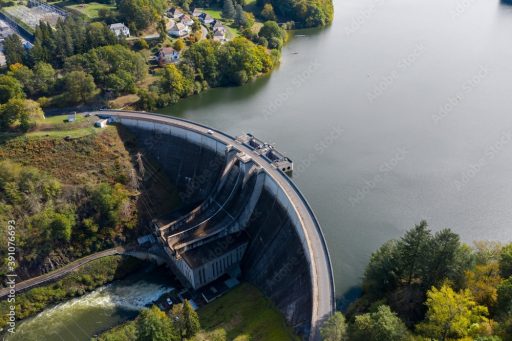
Hydroelectric power plants play a fundamental role in renewable energy production in France. This clean energy source provides on average 12% of the country’s total electricity production. Installed hydroelectric capacity in mainland France is among the largest in Europe, with more than 25,000 MW(1) of total power available. Around 150 hydroelectric plants offer production capacity greater than 30 MVA(2), with outputs varying from a few dozen to many hundreds of megawatts.
The country’s largest hydroelectric power plants are mostly located along its major waterways such as the Rhône and Durance. The Grand’Maison plant in the Isère department is one of the country’s most powerful, with installed capacity of 1,800 MW. The power plant in Couzon-au-Mont-d’Or, on the other hand, is the epitome of so-called “small hydro”, with output of just 4 MVA (see sub-article).
Long-overdue renovations
Many French hydroelectric plants – though still in service – were originally built between 1900 and 1980. These aging facilities, and their generators in particular, are becoming increasingly damaged due to their long operating lives.
Yet these hydroelectric plants play an essential role in maintaining network stability thanks to their flexibility, availability and storage capacities. Breakdowns can cause lengthy production stoppages, and consequently reductions in available capacity, which have an impact on the country’s overall energy efficiency.
“We are preserving our number-one source of renewable electricity, ensuring the long-term future of a key tool for network stability.”
“Technological advances, especially in generator design, are now making it possible to improve their performance,” says Yann Lepront, Business Unit Manager at Omexom Hydro Services. “Significant advances have been made in relation to turbines and other moving parts in the generators, allowing power increases in the order of 20% while reducing losses.”
But the impact of European legislation, in particular the 2014 directive introducing competition to hydroelectric concessions, may have discouraged renovation projects. “This process encouraged French hydroelectric plant operators to postpone plans to renovate and modernise their infrastructure,” says Yann Lepront. “It is a risk to invest in the renovation of these sites with no guarantee of continuing to operate them if the concession is renewed and a new operator wins the contract.”
Modernisation plan
However, given the need to meet climate and energy transition targets, the renovation of hydroelectric power plants – which will reduce CO2 emissions by replacing fossil-energy production with clean energy – has become a priority. EDF is therefore currently drafting an asset plan, which includes their generators. The aim of this plan is to precisely establish the current state of all existing assets and identify the associated renovation needs.
“In regard to generator renovations, Omexom obviously wants to be part of these projects, and our teams stand ready,” says Yann Lepront. The business leader foresees “a promising market for at least the next 15 years, with plenty of work also to be done on recovering raw materials (steel and copper).”
Omexom Hydro Services is ready to make its expertise count in this market for the modernisation of hydroelectric facilities. The business unit has been working in recent years on EDF’s La Bâthie power plant in southeastern France, helping to increase production from each of the site’s six generators from 80 to 107 MVA. Omexom Hydro Services has also worked on the power plants in Sainte-Tulle (in the Alpes de Haute Provence department) and Montahut (in Hérault), increasing their respective outputs from 55 to 60 MVA. In Montahut, its teams are currently working on a second generator unit to increase power from 50 to 60 MVA.
“By renovating our hydroelectric assets, we are preserving our number-one source of renewable electricity, ensuring the long-term future of a key tool for maintaining network stability (which is not possible with solar or wind), and enhancing their performance,” says Yann Lepront. With increasing demand for renewable energies and the current focus on energy transition, the renovation of hydroelectric power plants promises to be a dynamic sector over the next few years.
Small hydro – a hidden national treasure
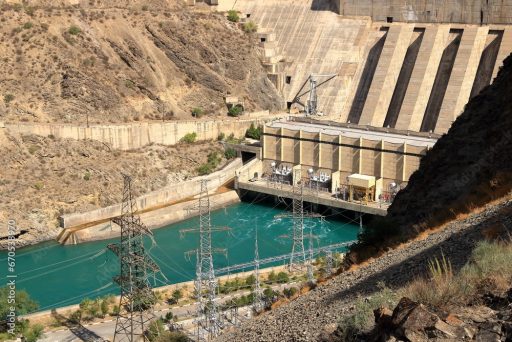
France has more than 2,300 small hydro power (SHP) plants installed along its 250,000 km of rivers. According to the producers’ union France Hydro Electricité, the SHP plants produce 6 TWh a year, equivalent to the consumption of 1.3 million households and 10% of national hydroelectric production. In total, SHP plants account for around 2,460 MW of installed power, an average of approximately 1 MW per plant.
As David Fatou, Business Unit Manager at Actemium Grenoble, explains, “In a context where it’s increasingly difficult to gain acceptance for new large-scale power plants, these small hydroelectric plants, with their limited environmental impacts, are far simpler to implement because the authorisations are easier to obtain.” In addition to their greater social acceptability, SHP plants are rarely subject to breaks in production, unlike wind and solar, which are naturally intermittent.
Enormous potential
However, they are subject to strict legislation on ecological continuity (see box) and the classification of waterways that governs all new dam construction. Despite these constraints slowing the construction of new power plants, France Hydro Electricité estimates that there is still untapped potential in the region of 2.7 to 3.7 TWh.
ADEME more cautiously evaluates the potential additional production from small hydro by 2035 at 485 MW, equivalent to a small fraction of a nuclear power plant’s output. But it is undoubtedly climate change, with its impact on the regularity of water flows, that poses the greatest threat to the development of SHP plants.
Currently, most of these small hydro power plants are privately owned. But local electricity operators are also managing and developing their own SHP projects. “In Haute‑Savoie, we installed a 1 MW plant in Bonneville in 2018 and a 1.2 MW plant in Le Bourgeat, near Sallanches, in 2024,” says David Fatou, who sees numerous opportunities in this market.
Alongside its work with EDF and CNR (Compagnie nationale du Rhône), his business unit has developed two SHP solutions: “An EIA (Electricity, Instrumentation, Automation) solution, which covers everything from the water intake to the transfer of energy to the Enedis distribution network; and a turnkey solution that combines the EIA component with the design, purchasing and installation of the turbine and alternator. The latter accounts for one-third of our projects in this market segment.”
Life4Fish: sustainable energy production with protection for fish
In Wallonia (Belgium), EDF-Luminus, Profish and the universities of Namur and Liège, in partnership with Actemium, created the Life4Fish project to provide fish such as salmon and eels with safe passage through hydroelectric facilities along the Meuse. In collaboration with the other Life4Fish partners, Actemium developed a multifunctional solution with a system to manage dam opening schedules, an underwater electric field to guide fish toward a specially designed passage past the turbines, and a predictive model capable of forecasting peak fish migration periods. This model also allows fish to pass in complete safety without having to stop the turbines.
(1) MW (megawatt) is a measure of the rate at which real power is consumed by electrical equipment to perform work.
(2) MVA (megavolt ampere) is a measure of apparent power, which comprises real power (MW) and reactive power (MVAr), which flows back and forth between load and source but performs no useful work.
12/15/2025