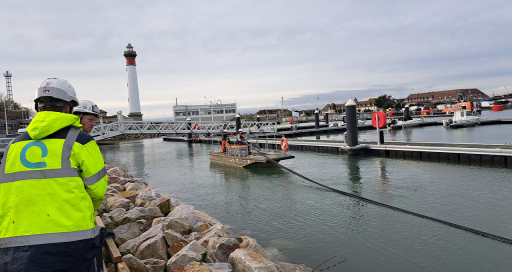
The ports of Tarifa and Algeciras plug into the energy transition
Reading time: 5 min
The two ports on Spain’s southern tip are moving a step closer to a more sustainable maritime model. Thanks to OPS solutions developed by VINCI Energies, ferries and commercial ships will be able to stop their engines while docked, massively reducing their atmospheric emissions and noise pollution.
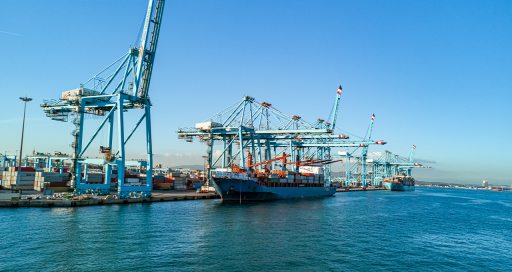
The decarbonisation of maritime transport is accelerating in Europe. Under the European Green Deal and the Fit for 55 package, the European Union is imposing a drastic reduction in emissions from docked ships. By 2030, OnShore Power Supply (OPS) will be the norm in major European ports. By allowing vessels to stop their auxiliary engines and connect to the onshore power supply network, these systems significantly reduce atmospheric emissions and noise pollution.
This is the context in which VINCI Energies is rolling out a number of strategic projects in the ports of Tarifa and Algeciras in southern Spain, following a call for tenders initiated by the Algeciras Bay Port Authority in 2025. “The main objective is to equip the ports with the infrastructure needed to supply ships with electrical power,” explains Jose Ganado Olmedo, Director of Ports and Renewables at VINCI Energies Spain.
Wharves 2 and 3 in the Port of Tarifa and Wharves 7B and 8 in the Port of Algeciras were assigned to VINCI Energies in June 2025. “With our bid, we had proposed our internally developed OnShoreBox solution, with the capacity increased from 400 to 750 kVA,” explains Jose Ganado Olmedo. Work on these projects began in February 2026, with commissioning scheduled during the fourth quarter of 2026.
Tarifa: electrifying ferries and the local fleet
In Tarifa, the OPS system will supply power to ferries plying the route between Tarifa and Tangier (Morocco), and will also provide 36 connection points for fishing boats, with two more for a patrol boat and a pleasure cruiser. The project includes the installation of a medium-voltage (20 kV) switching station, a 20/0.69 kV transformer specifically for OPS, a substation for the fishing area, and electrical lines installed as far as the anchorages, plus two fixed connection points equipped with a cable management system.
“It enhances a port’s competitiveness and mitigates regulatory risks”
The environmental benefits are considerable. “We estimate an annual reduction of 1,148,000 kg of CO2, 23,760 kg of NOx, 7,920 kg of SOx, and 1,980 kg of fine particulates,” says Jose Ganado Olmedo. Shutting down the auxiliary engines will also “considerably reduce noise levels and enhance the urban environment”.
Algeciras: enhanced capacity for links with Ceuta
In Algeciras, OPS will supply power to the ferries linking the port with Ceuta, the autonomous Spanish city bordering Morocco on the North African coast. The infrastructure will be able to power two 400 kVA ferries simultaneously, or a single ferry up to 800 kVA. The project includes an 800 kVA transformer, a 20/0.69 kV transformer station, civil engineering works, cable laying under the port foundations, and two fixed connection points, each with a CMS. The annual environmental benefit is estimated to be “1,913,000 kg of CO2 eliminated, along with 39,600 kg of NOx, 13,200 kg of SOx, and 3,300 kg of fine particulates”.
Integrated solution, recognised expertise
“The OPS solution is designed, built and integrated by VINCI Energies Spain,” says Jose Ganado Olmedo. OnShoreBox is compliant with the international IEC/IEEE 80005 standard and incorporates a “full control and monitoring system, which automates the majority of vessel connection and disconnection operations”.
The business unit is also drawing on “Omexom’s [the VINCI Energies energy infrastructure brand] historical expertise in medium and mains-voltage lines and in civil engineering work” and on its experience acquired from numerous port projects in Spain.
An environmental and economic lever
Along with the reduced greenhouse gas emissions, Jose Ganado Olmedo points out that “ports offering electrical supply services attract companies committed to ESG policies”. OPS also “enhances a port’s competitiveness and mitigates regulatory risks” given that the European Union will be making these services mandatory in high-traffic ports between 2030 and 2035.
He concludes that “the initial investment is high, but the energy costs are lower than using marine fuels, and the auxiliary motors will require less maintenance”.
The installation of the OPS at the ports of Tarifa and Algeciras are part of the Decarbonisation Plan part of the Port Authority’s Green Sustainability Strategy.
09/10/2026