The Belgian municipality of Beersel has transformed its public buildings into models of energy efficiency. Thanks to an energy performance contract with VINCI Facilities (VINCI Energies Building Solutions), seven municipal sites are now boasting 35% energy savings and a clear reduction in their carbon footprints.
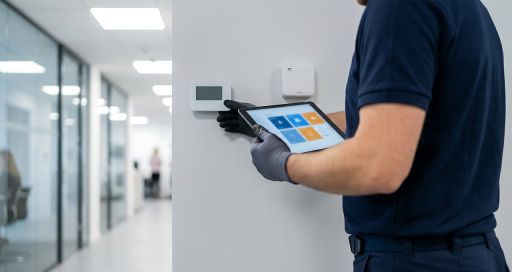
In the face of climate change and surging energy prices, local authorities are seeking ways to reconcile energy performance and user comfort. In Belgium, the municipality of Beersel, to the south of Brussels, is something of a pioneer in this area. In 2018, it awarded VINCI Facilities Belgium a 10-year maintenance and energy performance contract (M‑EPC) covering seven municipal buildings. The goal is to reduce energy consumption over the long term and to prepare building assets for new climate challenges.
“The call for tenders began in 2017, and we won it the following year,” says Patrick De Visscher, Innovation & Energy Manager at VINCI Facilities. As an “energy service company” (ESCO), the business unit had plenty of room for manoeuvre to offer comprehensive solutions and guaranteed results. He continues: “For an investment of €1.5 million, we guaranteed 25% energy savings, worth around €84,000 a year.”
Adaptation and raised awareness
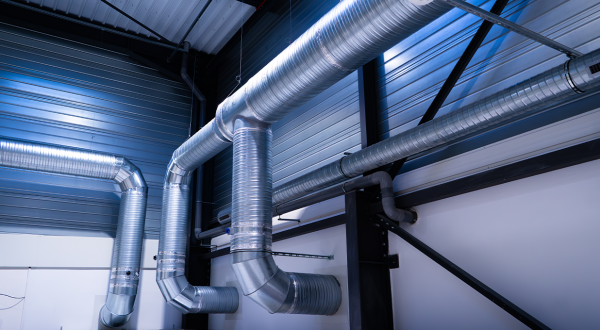
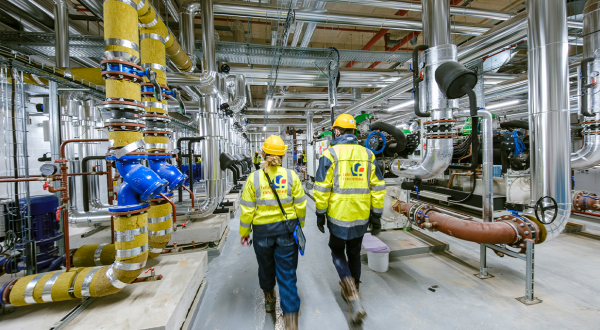
Under this M‑EPC, 25 concrete measures were implemented, including the replacement of boilers with heat pumps; optimised regulation; modernised ventilation; and the replacement of existing lights with LEDs. These actions were performed without interrupting activities in the buildings, which was a major logistical challenge. “The works took two years rather than one, because we had to maintain service continuity on the occupied sites,” explains Patrick De Visscher.
“Energy performance depends as much on behaviours as on equipment”
In addition to the technical aspects, the project’s success also hinged on raising user awareness. Posters and stickers helped promote best practice, addressing for example people’s post-Covid tendency to leave windows open. “We have to constantly reinforce the message that energy performance depends as much on behaviours as on equipment,” says the Innovation & Energy Manager.
VINCI Facilities technicians received training to help them focus on energy saving in their operations, always checking the energy performance of installations as well as ensuring they are running correctly.
Win-win
The results are exceeding expectations. Seven years later, savings of 35%, or around 5.7 million kWh have been achieved, equivalent to 1.200 tonnes of CO₂ emissions avoided. For the municipality of Beersel, this represents savings of €596,000, enabling the repayment of the initial investment (€1 million for the energy performance part) at the end of the contract.
“This contract is a win-win model thanks to the bonus/penalty mechanism: if we exceed the guaranteed savings, Beersel benefits and so do we,” says Patrick De Visscher.
Beersel’s experience illustrates the key issue of adapting tertiary buildings to a changing climate. While heating needs are decreasing, cooling needs are increasing, and so the risk of overconsumption grows. Hence the importance of bioclimatic design (orientation, solar protection, natural ventilation) in preference to active climate control.
“Energy performance contracts are powerful levers in support of the ecological transition,” says Patrick De Visscher. “Unfortunately, they are still not being used enough in Belgium.” The example of Beersel proves that an ambitious energy strategy combining technical innovation with collective commitment can sustainably transform public assets to address climate change.
Primatice recognised at the Green Solution Awards
The recipient of a Renovation Grand Prize at the Green Solution Awards 2024, the tertiary building Le Cologne (a 3,000 sq. metre building in the Parc Paris Orly-Rungis) epitomises excellence in low-carbon renovation. The project centres on Primatice, a technical macro-batch solution designed by VINCI Energies Building Solutions. The system is based on a radiant ceiling just 6 cm thick using air as the energy vector for both heating and cooling. The system can halve the risk from heatwaves. The result is a more resilient building, with its energy rating improved from D to B, and enhanced thermal comfort for its occupants.
04/16/2026