The tramway – weaving its threads through the urban landscape
Reading time: 5 min
With around thirty networks already in operation and numerous construction or extension projects under way, tramways are proving highly successful, particularly in medium-sized French towns.
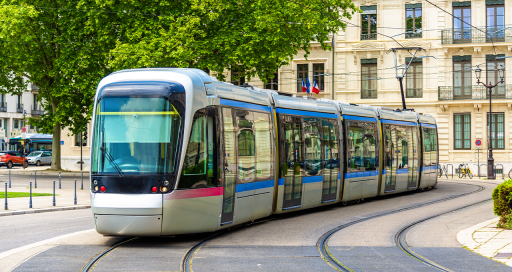
Trams have been used in France since the late 19th century, initially pulled by horses, then electrified in the 1900s, but were then mostly dismantled between the world wars before reappearing in the 1980s in cities such as Nantes, Grenoble, Strasbourg and Lyon.
Since then, many medium-sized towns have converted to this mode of urban transport, and this trend shows no sign of faltering. “Since the 2000s, all over France, network creation or extension projects have proliferated,” says Stéphane Berthet, Business Unit Manager at Mobility Signalling, a VINCI Energies business unit specialised in railway signalling. “All the major urban areas have consolidated their infrastructure or developed new systems.”
Around thirty networks are currently operating in France, with a similar number of new lines in development. The 2026 municipal elections have undoubtedly contributed to elected officials’ eagerness to inaugurate new infrastructure as polling day approaches.
The cleanest mode of transport after walking and cycling
But the buzz tramways are causing among urban local authorities is really due to more objective factors. This mode of transport has (almost) everything going for it. As local authorities fight on all fronts to reduce their regional greenhouse gas emissions, in the tram we have the most environmentally sound form of transport after walking and cycling. According to ADEME, the tram’s carbon impact (construction plus use) per person per kilometre amounts to 4.28 g CO₂e – less than the electric bus (21.7 g CO₂e) and far less than the combustion-engine bus (113 g CO₂e).
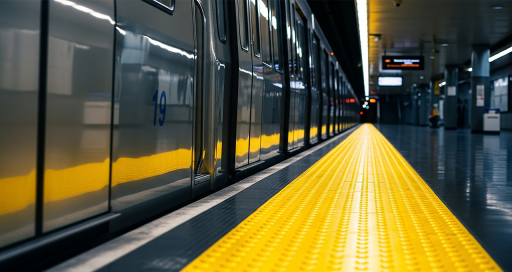
Additional arguments in favour of the tram are that it is quiet, faster than the bus (15 to 20 kph on average), and offers easier access for people with reduced mobility due to its ground-level boarding.
“A tramway is a catalyst for urban development”
In the negative column, tramways cannot match the operational flexibility of buses. In the event of a breakdown or roadworks, a replacement bus service is required for all or part of the tramway route. And of course, trams entail heavy financial investment. A tramway line is estimated to cost two to three times more than a bus line. And for good reason – a tramway network requires significant modifications to roads and utilities.
A driver of urban development
In addition to its other benefits, “A tramway is a catalyst for urban development,” says Stéphane Berthet. “It often forms part of a wider local redevelopment project, including new infrastructure, development close to shops and services, and an interconnection with other transport links as part of a considered multimodal strategy.”
This is certainly the case in Lyon, where SYTRAL, the regional transport authority, is building two new lines – T9 and T10 – to serve municipalities such as Vénissieux and Vaulx-en-Velin, which have hitherto been difficult to reach by public transport from the city centre.
With soft mobility in the spotlight, cycle routes are also planned along these new lines, which are expected to enter service in 2026. The local authority has also acquired the disused former Fagor factories site for the construction of maintenance and storage facilities.
“These two new lines require not only a major transformation of urban spaces, but also complex technical developments,” says Stéphane Berthet. “The signalling systems, for example, are subject to safety protocols equally as rigorous as in the nuclear and aviation sectors, which in turn requires extremely advanced expertise.”
War for talent
Finding talented people in an employment market already overstretched by an inflated number of projects is a major challenge for the technical contractors appointed by transport operators and equipment manufacturers.
VINCI Energies business unit TranzCom Energy Distribution worked on the electrical engineering batch for the Liège tramway, which opened on 25 April 2025. “In January 2020, we won a contract covering eight traction substations and a depot substation,” explains Christophe Vandenbroucke, Business Unit Manager at TranzCom. “We are recognised in Belgium as experts in traction equipment. But the biggest difficulty for us was in sourcing the skills required. We had to recruit eight engineers.”
How long will this “tramway mania” last? The life of the equipment is fairly long (30 to 40 years), and the network overall is in reasonable condition, though some of the technologies are becoming dated. “Major opportunities in dealing with obsolescence will be opening up in the coming months and years,” says Stéphane Berthet. “The market will therefore remain extremely buoyant for communication technology integrators.”
04/16/2026